A 30-minute private boxing lesson is enough for focused technique instruction, not a complete boxing education or competition preparation. Warm-up, explanations, corrections, and rest also take time, so the lesson needs a narrow goal. In 2026, judge a short session by whether you leave with a clearer movement and a repeatable practice task—not just whether you feel exhausted.
- Is a 30 minute boxing lesson enough? Yes, for focused technique coaching—not every training goal.
- Prioritize stance, footwork, or a specific punch correction instead of covering everything.
- Better Through Boxing provides live private boxing coaching for beginners through competitors.
- A short lesson does not establish sparring readiness or replace a complete training plan.
Why this matters
A busy lesson and a useful lesson are different things. Running through punches, slipping, pivots, mitt work, and conditioning can leave you with plenty to remember but no clear idea of what to fix first.
Private instruction gives you a place to ask questions and receive corrections. Use that attention to solve a specific problem. If you are new, start with preparing for your first boxing lesson rather than trying to arrive with advanced combinations already memorized.
The useful question is not simply whether the appointment lasts long enough. It is whether the coach can explain the task, observe your attempt, correct it, and check that you understand the correction.
Is a 30-minute private boxing lesson enough?
Yes—a 30-minute private boxing lesson is enough when its goal is specific and the coaching stays focused. Examples include learning a stable stance, correcting your jab, or practicing a step without crossing your feet. It is not enough to cover every part of boxing in depth.
Choose the lesson around what you need to learn, not around how many drills you can fit into the appointment.
| Lesson focus | Best for | What makes it useful | Main limitation |
|---|---|---|---|
| Focused technique | Beginners learning fundamentals; experienced boxers correcting mechanics | The coach can observe and revisit the same movement | Leaves less room for a broad workout |
| Technique plus conditioning | Learners who want instruction and physical training | Connects movement practice with an athletic task | Conditioning takes time away from detailed correction |
| Broad skill review | Boxers checking several familiar skills | Identifies which movement needs attention next | Less time to work through each correction |
| Competition preparation | Competitors working on a defined training task | Addresses a specific technical or strategic need | A short appointment is not a complete competition plan |
These are ways to organize instruction, not named packages or promised outcomes. For your 2026 training plan, decide which row describes the purpose of the lesson before deciding whether the duration suits you.
A 30-minute beginner lesson: prioritize stance and control
A beginner does not need a long list of punches to make the first lesson useful. You need to understand where your feet belong, how to hold your guard, and how to move without losing your base.
Start with stance. Your coach should help you distinguish a comfortable position from one that leaves you reaching, leaning, or struggling to move. Then connect that position to a simple action, such as stepping or throwing a jab.
Learn the movement slowly enough to notice what changes. If your feet narrow every time you punch, adding a longer combination does not address the problem. Return to the stance and practice the action without sacrificing balance.
The limitation is coverage. A focused beginner lesson leaves other skills for later, and that is preferable to touching every topic without understanding any of them. Leave knowing what to practice and what error to watch for.
A 30-minute technique lesson: correct a specific movement
For a boxer with some experience, a short private lesson works best around a clearly described problem. Tell the coach what breaks down: your rear hand drops after the cross, your feet cross when you move sideways, or you lose balance during a pivot.
Your description gives the lesson a starting point. The coach still needs to observe the movement rather than assume your diagnosis is correct.
A useful correction connects the visible error to an action you can change. Being told to improve your footwork is less useful than understanding which foot moves first and where your weight belongs afterward.
The drawback is that a successful isolated repetition does not establish the skill under every condition. Ask how to practice the corrected movement, then bring it back for review. Treat the lesson as a correction cycle, not proof that the skill is finished.
A 30-minute conditioning lesson: separate exertion from learning
If your main goal is fitness, explain that before the lesson starts. Boxing conditioning, reaction drills, and movement practice can share a session, but each uses part of the available time.
Fatigue is not evidence that your technique improved. A demanding workout and a detailed technical lesson answer different needs, even when both involve punches.
Watch what happens to your stance and guard as the task becomes harder. If you stop returning your hands or begin falling forward, tell the coach rather than pushing through solely to make the workout feel tougher.
The advantage of a conditioning-focused lesson is its clear physical purpose. The limitation is less time for explanations and repeated technical adjustments. For 2026, choose that trade-off deliberately rather than expecting a short appointment to deliver every training goal equally.
How should you organize a short private boxing lesson?
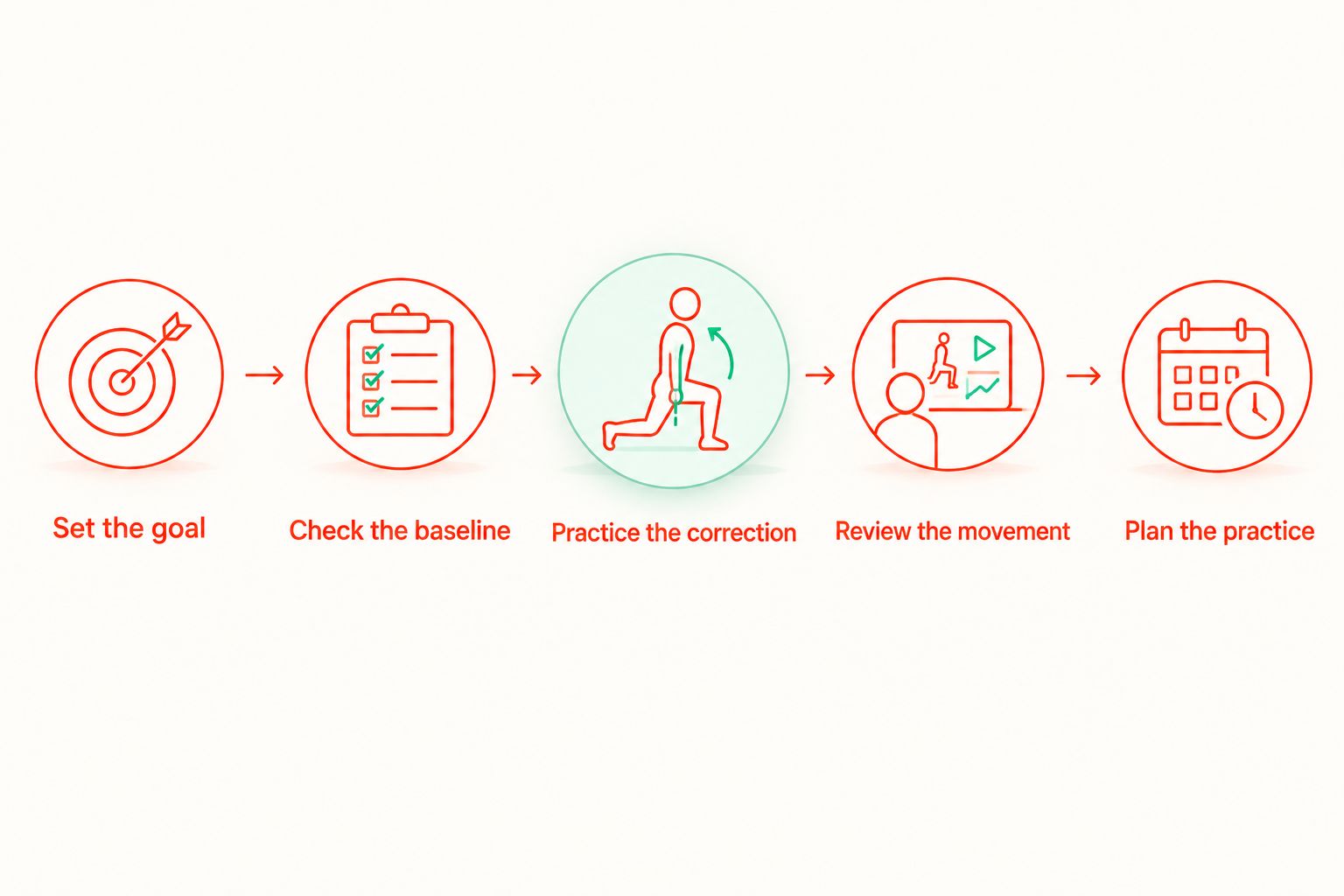
Use the following sequence to keep the appointment centered on learning. It is a planning framework, not a fixed session schedule or a promise about how a particular coach divides the time.
- Set the goal. Tell the coach what you want to understand or improve. Make the goal observable, such as maintaining your stance while stepping, rather than simply getting better at boxing.
- Check the baseline. Demonstrate the movement at a controlled pace. Give the coach a clear view of your feet, hands, and balance.
- Practice the correction. Work on the adjustment the coach identifies. Avoid adding speed or complexity before you understand the instruction.
- Review the movement. Repeat the task and ask what changed. Explain the correction back in your own words if the cue remains unclear.
- Plan the practice. Finish with a task you can repeat between lessons and an error you should watch for.
This sequence gives the session a beginning, a purpose, and a follow-up. Protect the correction and review stages instead of rushing straight from demonstration to harder drills.
Why the value of a 30-minute lesson varies
Duration sets the boundary. These factors determine what you can sensibly work on inside it:
- Your starting skill. A beginner needs explanations of stance and movement; an experienced boxer can bring a familiar action for detailed review.
- The lesson goal. Footwork correction, defense practice, conditioning, and strategy require different tasks. Name the priority before starting.
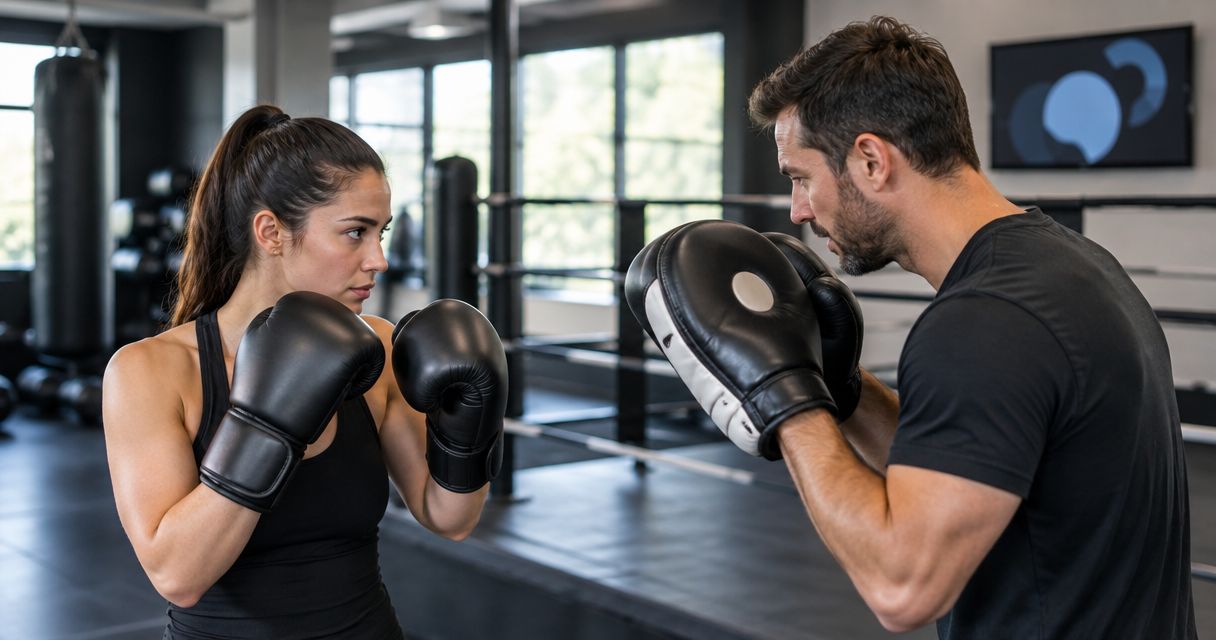
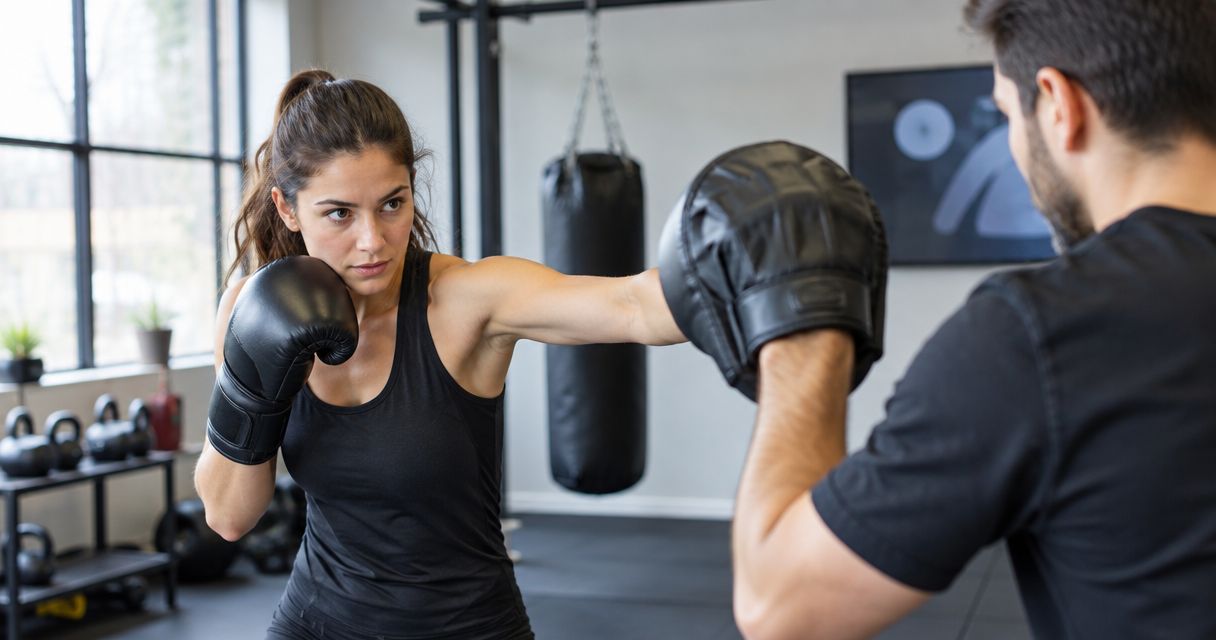
- The delivery format. In-person instruction supports physical mitt work; live virtual instruction relies on the coach observing you through the camera.
- The training space. Clear footing and room to move let you practice the intended task. Obstacles change what is safe to attempt.
- Your understanding of the correction. Repetition helps only when you know what you are trying to change. Ask for another explanation when a cue does not make sense.
- Practice between appointments. Revisit the assigned movement rather than introducing unrelated drills that distract from the correction.
These are reasons to adjust the lesson, not excuses to cram more into it. A narrow session that addresses your current needs is more coherent than a broad session built around unrelated activities.
Is a 30-minute virtual boxing lesson enough?
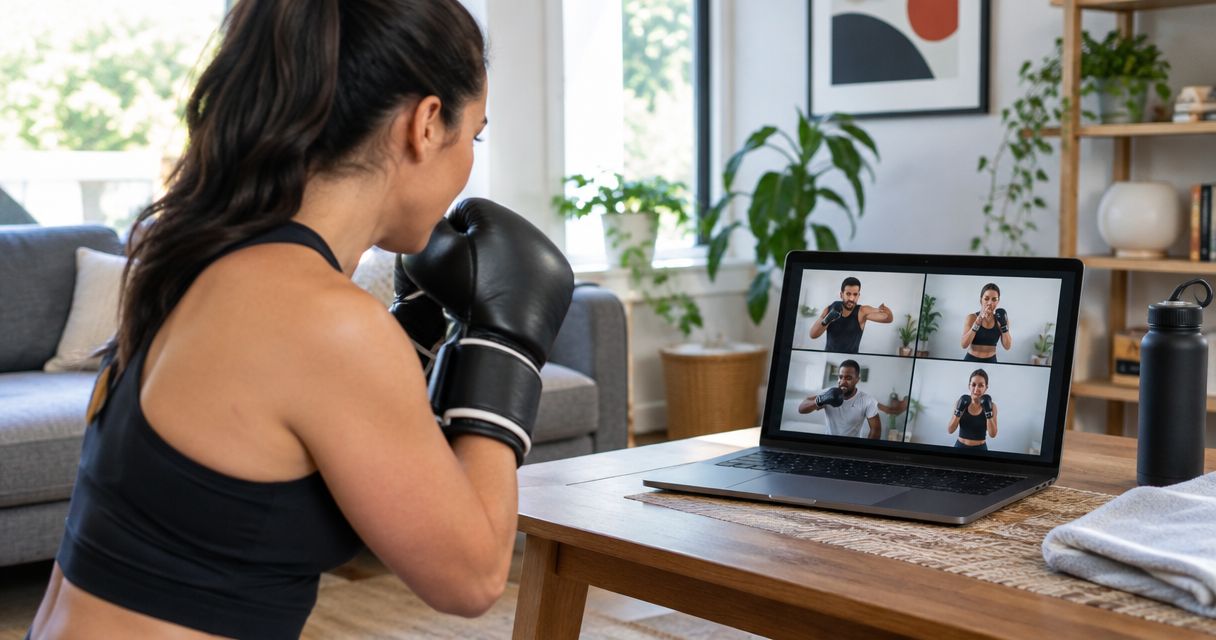
A 30-minute virtual boxing lesson is enough for a focused, non-contact technique task when the coach can see your movement clearly. Position the camera so your feet and hands remain visible. A close-up of your upper body hides information the coach needs to assess stance and footwork.
Check your connection and training area before the appointment. Do not discover during instruction that stepping backward takes you out of view or that furniture blocks your movement.
Virtual coaching has a clear limitation: the coach cannot physically hold mitts for you through a screen. It can support live observation and instruction, but it does not turn solo training into contact practice.
Is a 30-minute lesson enough before I start sparring?
A 30-minute lesson does not establish that you are ready to spar. Readiness involves more than demonstrating a punch: your coach needs to assess control, defense, movement, and how you respond to instruction in an appropriate supervised setting.
Do not use elapsed lesson time as permission to begin contact training. Sparring requires a separate discussion about preparation, supervision, and suitable partners. Virtual solo lessons are not a substitute for that assessment.
Should I choose more frequent lessons or longer lessons?
A 30-minute lesson suits a narrow task; a broader task needs room for more instruction and review. Choose according to what your coach identifies, rather than assuming either frequency or duration automatically wins.
If you understand the correction but struggle to repeat it independently, discuss how to structure practice and follow-up. If the appointment repeatedly ends before you understand the task, discuss a narrower focus or a different session format.
For your 2026 schedule, choose a plan you can attend and support with purposeful practice. The calendar matters, but it does not replace an instructional goal.
Where live private boxing coaching fits
Better Through Boxing private boxing coaching fits beginners who want live instruction in stance, footwork, and defense. Coach Chris Persaud works with beginners through competitors through live virtual coaching and in-person coaching in the NJ area.
Better Through Boxing also offers the 6-week Zoom-based Better Through Boxing Basics Program. That program is a separate learning format; its duration does not establish the length or content of an individual private appointment.
The benefit is live interaction around real boxing mechanics rather than following a workout without personal feedback. The constraint remains the format: virtual instruction cannot provide physical mitt holding, and a short appointment still needs a focused goal. Ask about the session structure that matches your experience and priorities.
FAQ
Is a 30 minute boxing lesson enough for a complete beginner?
A 30-minute boxing lesson is enough for focused beginner instruction, such as stance and a simple movement. It is not enough to learn every fundamental in depth, so leave with a clear practice task.
Can I learn real boxing technique in a short private lesson?
A short private lesson can address real boxing technique through demonstration, observation, and correction. Judge it by whether you understand the movement, not by how many combinations you complete.
Is a 30-minute boxing lesson a complete workout?
A 30-minute boxing lesson is not automatically a complete workout for your goals. Tell the coach whether you want technique instruction, conditioning, or a mix, because each uses part of the appointment.
Should I warm up before a private boxing lesson?
Ask your coach how to prepare and whether the warm-up belongs before or within the appointment. Do not skip preparation simply to leave more time for punches.
Can I take a 30-minute boxing lesson over Zoom?
A 30-minute Zoom lesson can support focused non-contact instruction when your coach can see your stance and movement. Confirm the available appointment format with the provider rather than assuming every service offers that duration.
Does a short boxing lesson mean I can spar afterward?
A short boxing lesson does not establish sparring readiness. Ask your coach for a separate assessment of your control, defense, and preparation for supervised contact training.
What should I practice between private boxing lessons?
Practice the movement and correction your coach assigns, at a pace that lets you maintain control. Ask which mistake to watch for so repetition does not become an unrelated workout.
Does Better Through Boxing offer live private instruction?
Better Through Boxing offers live private boxing coaching with Coach Chris Persaud through virtual lessons and in-person NJ-area coaching. Instruction covers real boxing mechanics, footwork, defense, strategy, and conditioning for beginners through competitors.
One last thing
Before finishing your next lesson, demonstrate the movement without another reminder. Then explain what you changed and what you will practice.
That is a more useful check than asking whether the session felt hard enough. For 2026, make your standard simple: leave with a correction you understand, not just a drill you remember. If you cannot explain the task, ask the coach to clarify it before adding complexity.