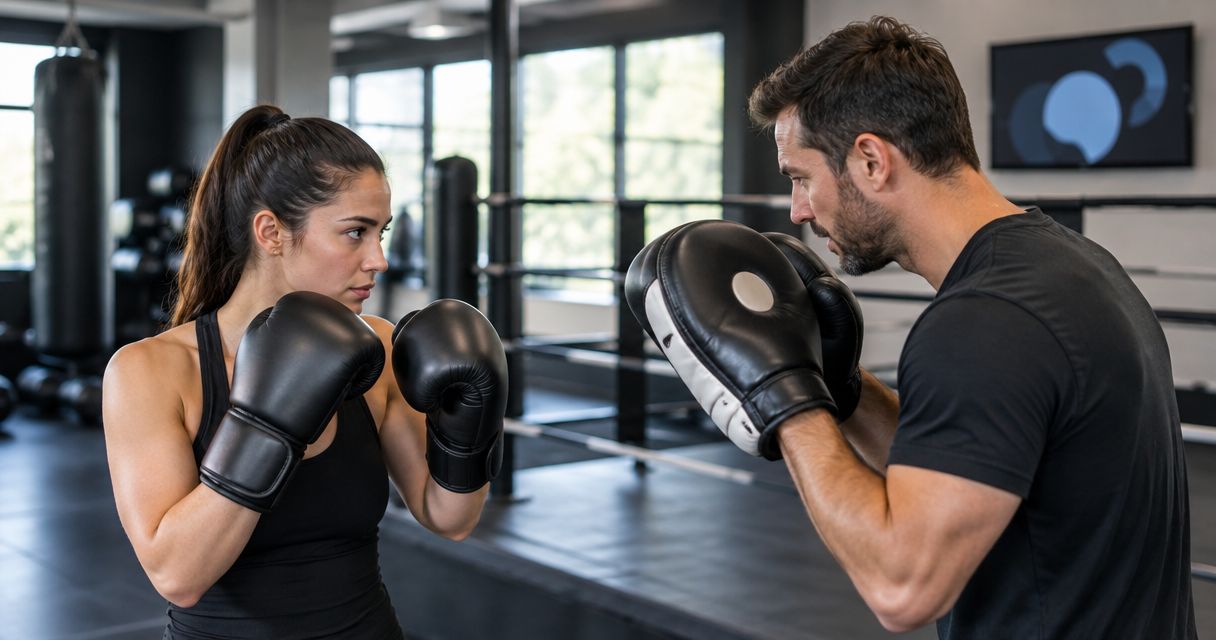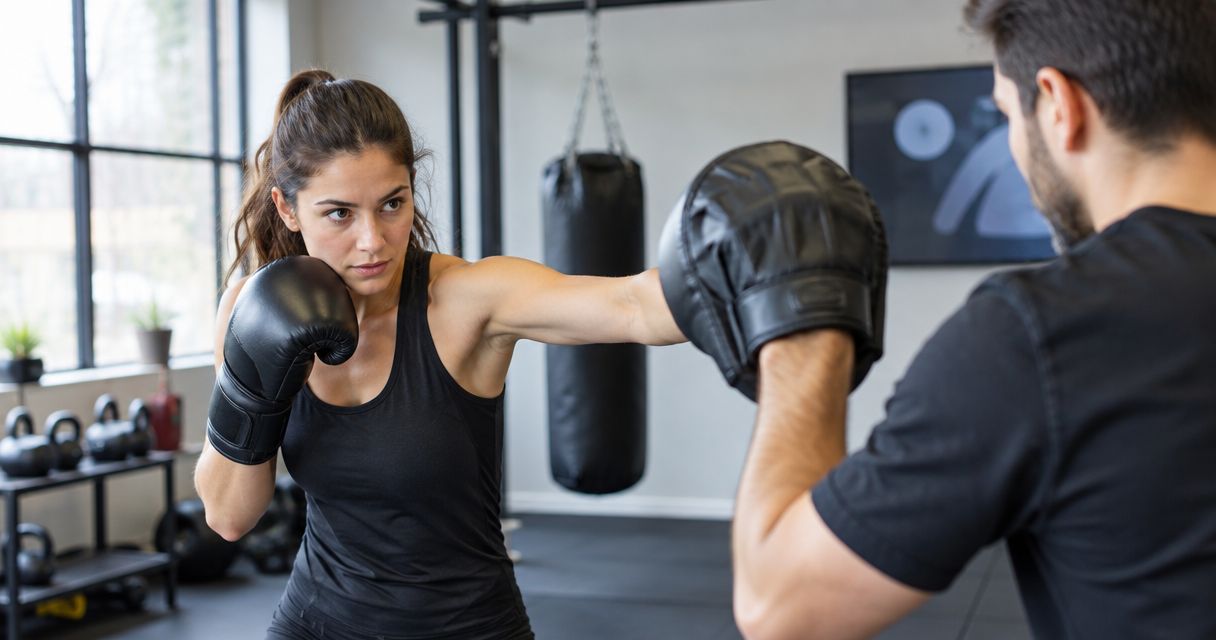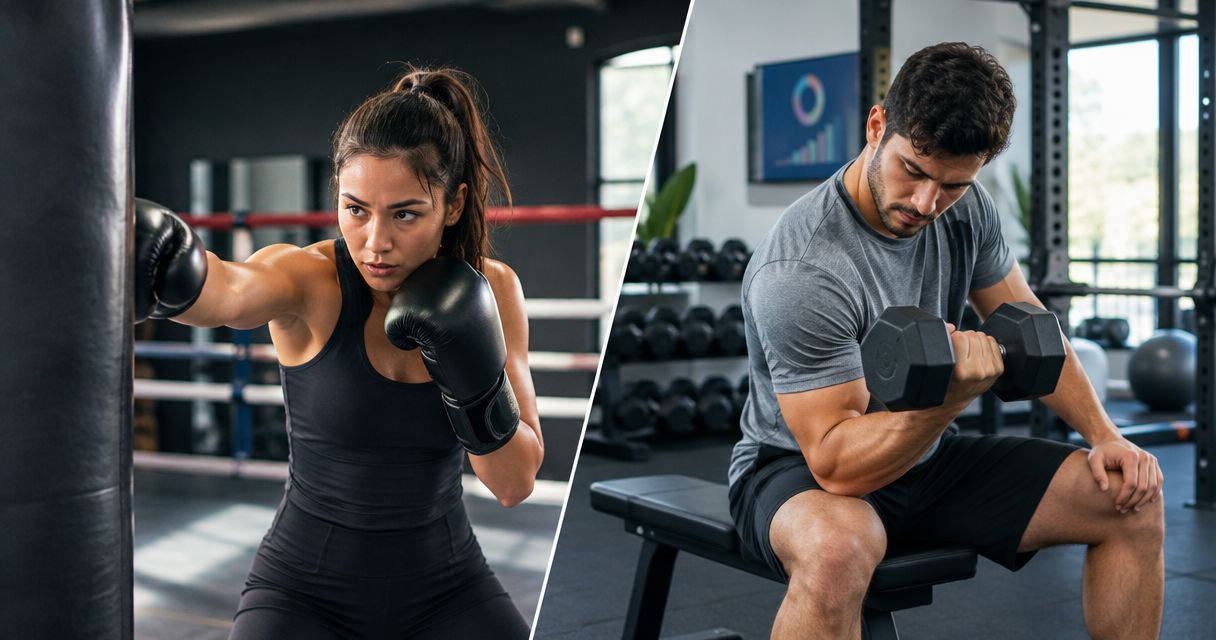
Boxing can replace your gym cardio workout, but it does not automatically replace a complete strength-training program. In 2026, the right choice depends on your goal: use boxing for conditioning and skill development, and keep progressive resistance training if you want to build muscle or increase strength.
- Can boxing replace a gym workout? Yes for cardio; not by itself for progressive strength training.
- Better Through Boxing suits beginners who want live boxing coaching rather than an unsupervised workout.
- Boxing and resistance training serve different goals; combine them when you want conditioning and muscle development.
- Noncontact boxing develops stance, footwork, and punching mechanics without requiring sparring.
Can boxing training replace a regular gym workout?
Boxing replaces the activity, not necessarily every benefit your gym routine provides. If your current workout consists mainly of treadmill sessions or stationary cycling, boxing offers another way to train cardiovascular fitness. If your routine includes progressively heavier squats, rows, presses, and other resistance exercises, punching does not reproduce that training stimulus.
Start with the purpose of your workout. Better Through Boxing provides private boxing coaching with Coach Chris Persaud, including live virtual instruction and in-person coaching in the NJ area. That service addresses boxing technique and conditioning; it should not be treated as a substitute for every form of exercise.
| Training approach | Best for | What it contributes | Main limitation |
|---|---|---|---|
| Boxing training | Conditioning plus boxing skill | Footwork, punching mechanics, defense, and sustained physical effort | Does not automatically provide progressive resistance for all major muscle groups |
| Gym cardio | Straightforward cardiovascular exercise | Walking, running, cycling, or other repeatable aerobic activity | Does not teach boxing technique or replace strength training |
| Gym resistance training | Strength and muscle development | Adjustable resistance and measurable progression | Does not teach boxing-specific movement or defense |
| Boxing plus resistance training | A mixed fitness goal | Conditioning, skill practice, and planned strength work | Requires managing fatigue across both activities |
You do not need a gym membership to meet every fitness goal. You do need a plan that covers those goals. A home resistance routine can complement boxing, provided its exercises and progression match your needs.
Why this matters
Replacing a workout without identifying its purpose creates gaps. You can finish a boxing session breathing hard while still leaving your pulling strength or lower-body resistance work unaddressed. Effort is real, but effort alone does not tell you which adaptation you trained.
For your 2026 routine, separate three questions: Are you getting enough aerobic activity? Are you training your major muscle groups against resistance? Are you learning a skill you want to improve?
Boxing directly addresses the skill question and can contribute to the aerobic one. The resistance question depends on what else your program includes. That distinction prevents you from confusing a demanding workout with a complete training plan.
Boxing for cardio: a practical gym replacement
Choose boxing to replace gym cardio when you want conditioning with a technical task. You work on stance, movement, punches, and defense instead of repeating a single machine-based movement. The training demand depends on how much you move, how hard you work, and how much rest the session includes.
A technique lesson is not automatically a vigorous workout. Your coach might stop you to correct your rear foot, explain a slip, or rebuild your jab. Those pauses serve learning, even when they reduce continuous exercise time.
The U.S. Department of Health and Human Services' Physical Activity Guidelines for Americans recommends that adults accumulate at least 150 minutes of moderate-intensity aerobic activity per week, or 75 minutes of vigorous-intensity activity, or an equivalent combination. Those are adult health guidelines, not a promised result from a boxing program.
Apply that distinction when planning boxing in 2026. Count the activity you actually perform rather than treating the full booking length as vigorous exercise. A conversation about mechanics, a camera adjustment, and sustained footwork are different parts of a lesson.
The talk test helps you judge effort without chasing a wearable score. During moderate activity, you can talk but not sing; during vigorous activity, you cannot say more than a few words without pausing for breath. The CDC uses this approach to explain relative exercise intensity.
Boxing for strength: keep progressive resistance
Keep resistance training if strength or muscle development is a priority. Throwing punches involves your legs, trunk, shoulders, and arms, but using a muscle is not the same as progressively loading it through a planned resistance program.
Resistance training lets you adjust the challenge directly. You can change the load, exercise difficulty, repetitions, or range of motion while tracking whether you perform the movement well. Boxing progression also includes timing, accuracy, balance, and decision-making; those improvements are not interchangeable with strength gains.
The same federal adult activity guidelines recommend muscle-strengthening activity involving all major muscle groups on 2 or more days per week. Boxing only fills that role to the extent that your actual program contains suitable resistance work. A label such as conditioning does not tell you which muscles are trained or how the difficulty progresses.
This does not mean you must keep every exercise from your old gym routine. It means you should retain the work that serves your strength goal. If you need a personalized resistance plan, use a qualified professional who can account for your experience, limitations, and other training.
Boxing plus strength: the better fit for mixed goals
Combine boxing and resistance training when you want both boxing skill and measurable strength progress. Let each activity do its own job rather than trying to turn every boxing drill into a strength exercise or every lifting session into conditioning.
For example, assess boxing practice through stance stability, footwork control, punch recovery, and defensive movement. Assess resistance work through the exercise, resistance used, and quality of execution. Separate records make improvement easier to interpret.
The trade-off is accumulated fatigue. Hard conditioning and demanding resistance sessions both require recovery, so adding boxing on top of an already full schedule is different from replacing an existing workout. Remove or adjust something rather than assuming more training always produces better results.
You also do not have to turn every lesson into an exhausting session. Technical practice has value when you can pay attention and repeat movements accurately. Losing your stance to finish another combination is not evidence of better boxing.
Why the answer varies
Whether boxing replaces your regular gym workout depends on the content of both routines. These factors change the decision:
- Your goal: General conditioning, muscle development, and competitive boxing require different training priorities.
- Your existing workout: Replacing treadmill time is different from removing a structured resistance program.
- The lesson content: Instruction, shadowboxing, footwork, mitt work, and conditioning create different demands.
- Your working intensity: Sustained movement and frequent technique pauses contribute differently to aerobic activity.
- Your recovery: A manageable replacement differs from extra training added to an already demanding week.
- Your coaching format: Live virtual instruction supports remote practice, while physical mitt work requires an in-person partner.
Judge the routine by these factors, not by whether it takes place inside a gym. Equipment and location affect what you can do, but neither guarantees a well-designed workout.
How to replace gym cardio without losing strength work
Use this sequence to build your 2026 plan. It keeps the decision tied to your actual training instead of a general claim that boxing is better than the gym.
- Set your goal. Write down whether your priority is conditioning, boxing technique, strength, or a combination. If you want muscle development, keep that requirement visible rather than assuming punching covers it.
- Audit your routine. Identify which sessions provide aerobic activity and which provide resistance training. Include home exercise and other regular physical activity, not just gym visits.
- Keep strength work. Preserve the exercises that address your muscle-strengthening needs. If you remove them, replace their function with an appropriate resistance plan rather than additional punching alone.
- Replace cardio. Use boxing in place of an existing cardio session before adding it to a full schedule. Tell your coach whether you want conditioning, technical instruction, or a balance of both.
- Review recovery. Track whether you can perform your next session with control. Persistent pain, declining movement quality, or fatigue that disrupts daily activity calls for adjustment, not more effort.
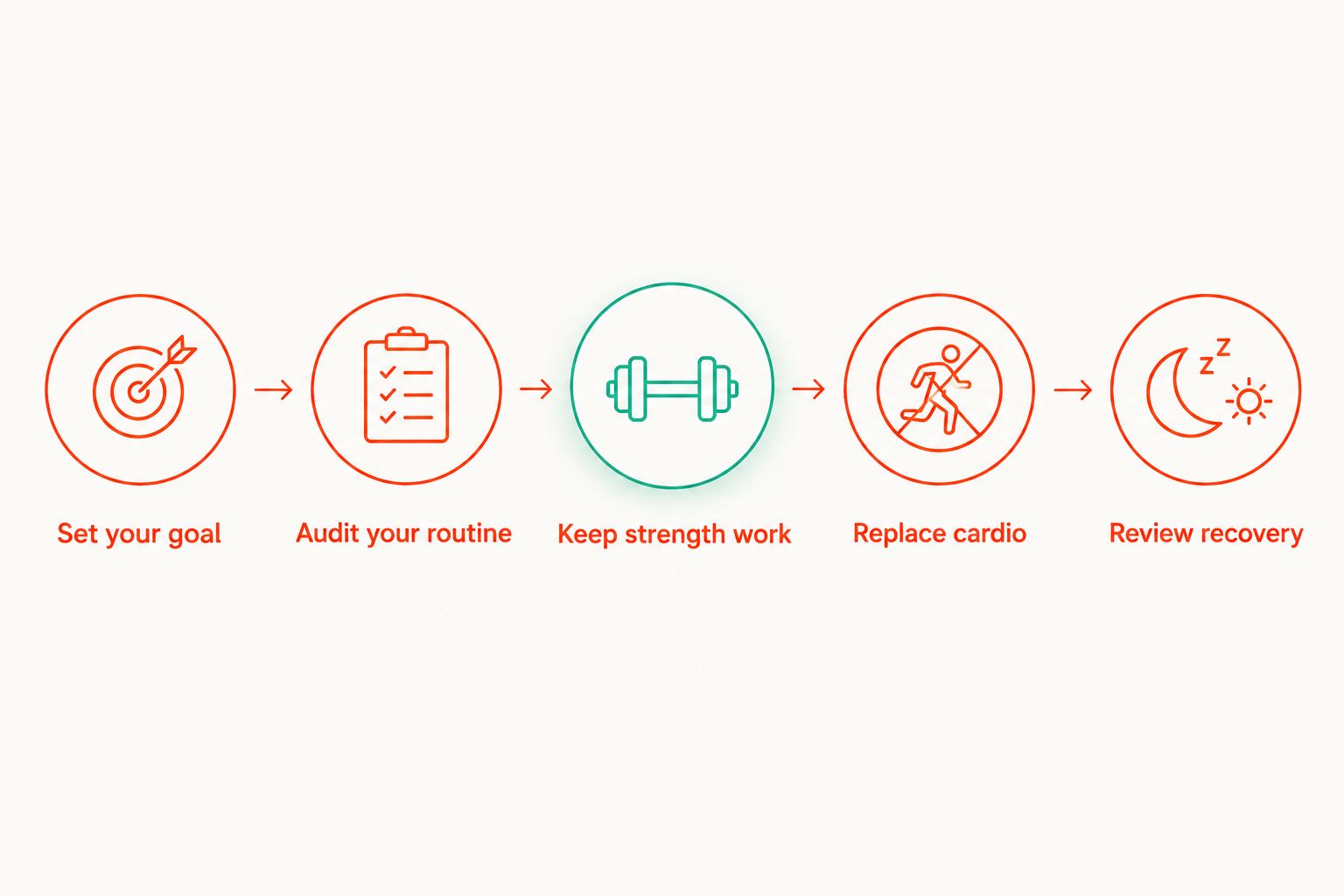
Review the plan against movement quality as well as workout completion. If you can throw combinations but repeatedly cross your feet or lose your balance, more speed is not the next step. Better positioning is.
What should a boxing workout include?
A boxing-focused session should connect the effort to recognizable skills. Your stance supports your movement; your feet put you in position; your punches return to a defensible position. Slipping and pivoting should remain controlled rather than becoming random movement performed while tired.
For home practice, make movement quality the priority before adding pace. Clear the training area, use a stable surface, and avoid furniture or objects that interrupt your steps. During virtual coaching, position the camera so your coach can see your stance and feet, not only your hands.
Use boxing footwork practice at home to connect lessons with deliberate practice. Repeating a movement correctly is a different task from doing it until you are exhausted.
You do not need sparring to use boxing as exercise. Noncontact training lets you work on movement, mechanics, and conditioning without treating head contact as a fitness requirement. Competition preparation is a separate decision with different demands.
Where does private coaching fit?
Better Through Boxing suits beginners who want live boxing instruction rather than an unsupervised fitness routine. Coach Chris Persaud teaches beginners through competitors, with instruction in mechanics, footwork, defense, strategy, and conditioning.
Better Through Boxing boxing coaching is available through live virtual lessons worldwide and in-person training in Somerset County, NJ, and surrounding areas. Its 6-week Better Through Boxing Basics Program is Zoom-based. That format gives beginners a defined learning option; six weeks is not a guarantee of mastery or a specific physical result.
The limitation follows from the format. A virtual coach can watch and correct your movement, but cannot physically hold mitts through a screen. In-person coaching enables physical mitt work, while remote lessons require a suitable camera view and training space.
For your 2026 decision, choose the coaching format around the instruction you need. Better Through Boxing boxing coaching is relevant when learning real technique matters to you; it does not remove the need to plan strength work separately.
Explore private boxing coaching
Train stance, footwork, defense, and conditioning with Coach Chris Persaud, virtually or in the NJ area.
Can boxing replace weightlifting if I want to build muscle?
Boxing does not replace progressive resistance training for a muscle-building goal. It uses your muscles, but a resistance program provides a more direct way to adjust loading and track strength progression.
Keep suitable resistance exercises alongside boxing instead of judging muscle-building potential by how tired your shoulders feel. Local fatigue after punching does not establish that you trained every major muscle group adequately.
Can I replace treadmill workouts with boxing at home?
You can replace treadmill workouts with boxing when the sessions provide the aerobic activity your routine needs. Shadowboxing and footwork allow movement practice without a treadmill or heavy bag, but the intensity depends on what you actually do.
Keep the comparison fair. A lesson spent learning stance is useful instruction, not the same session as sustained cardio. Tell your coach which function you are trying to replace.
Do I need to spar to get a boxing workout?
You do not need to spar to get a boxing workout. Footwork, shadowboxing, noncontact defensive drills, and conditioning can provide training without an opponent striking you.
Choose sparring for a boxing-specific reason, not because you believe exercise requires contact. Fitness and competition preparation are different goals.
FAQ
Can boxing replace a gym workout completely?
Boxing can replace gym cardio, but it does not automatically replace progressive resistance training. Keep separate strength work when muscle development or strength is part of your goal.
Is boxing better than the gym for general fitness?
Neither boxing nor a gym setting is automatically better for general fitness. Compare the actual aerobic activity, resistance work, and skill instruction in your routine.
How much aerobic exercise should adults get each week?
Adults should get at least 150 minutes of moderate-intensity aerobic activity or 75 minutes of vigorous-intensity activity per week, or an equivalent combination, according to federal physical activity guidelines. Count active training rather than assuming an entire boxing lesson is vigorous exercise.
How often should I do strength training if I box?
Federal adult physical activity guidelines recommend muscle-strengthening activity involving all major muscle groups on 2 or more days per week. Your boxing schedule should account for that work and the recovery both activities require.
Can a beginner use boxing as their main cardio workout?
A beginner can use boxing as their main cardio activity while learning stance, footwork, and punching mechanics. Start with controlled movements and match the effort to your current ability.
Can live virtual boxing lessons replace an in-person lesson?
Live virtual boxing lessons support real-time movement instruction, but they do not reproduce physical mitt work with an in-person coach. Choose the format around the skills and training setup you need.
Do I need a heavy bag to start boxing for fitness?
You do not need a heavy bag to start practicing stance, footwork, or shadowboxing. Bag training is a separate training method, not a prerequisite for learning basic movement.
One last thing
Remove the session you are replacing before adding the replacement. If boxing takes the place of treadmill cardio, keep the strength work and change the cardio activity. If you add boxing without changing anything else, you have increased your training load rather than replaced your gym workout.
Then judge success by your goal. Better conditioning, cleaner mechanics, and greater strength are different outcomes. Keep the work that produces the outcome you actually want.