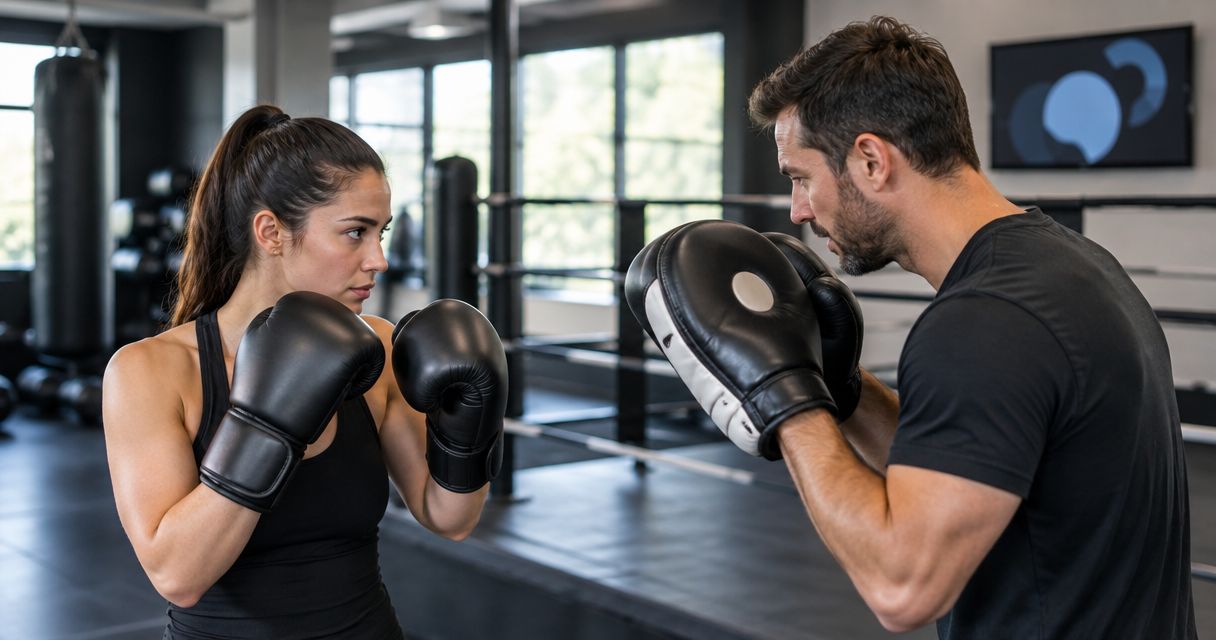
A legitimate private boxing coach can explain the mechanics they teach, correct your movement in real time, and set clear boundaries around contact and progression. Check any claimed credentials with the issuing organization, then judge whether the instruction matches your experience and goals. In 2026, a polished profile is not enough: you need evidence of teaching, not just evidence of training.
- How to know if a boxing coach is legit: verify claims, observe corrections, and check safety boundaries.
- A boxing coach should explain stance, footwork, defense, and why each correction matters.
- Better Through Boxing offers private boxing coaching for beginners through competitors, including live Zoom instruction.
- Reject pressure to spar, guaranteed results, and credentials the coach cannot explain or substantiate.
Why this matters
Private boxing coaching gives you direct access to an instructor, but that access only helps when the instructor can identify and correct your mistakes. A demanding workout is not proof of good teaching. Neither is a fast mitt-work video.
Better Through Boxing offers live private instruction with Coach Chris Persaud, covering mechanics, footwork, defense, strategy, and conditioning. Those are useful subjects to ask about when evaluating any coach: what will you learn, how will the coach assess it, and what happens when you struggle?
Your decision should separate three questions: is the coach's background verifiable, can the coach teach, and does the service fit your goals? Someone can pass one check and fail another. Treat all three as necessary.
How do you know if a private boxing coach is legit?
A legitimate coach makes the reason for a correction understandable and gives you a way to practice it. Use the following checks before committing to ongoing lessons. Apply the same standard whether the session takes place at home, outdoors, in a gym, or over Zoom.
Verify the background
Ask what experience supports the instruction being offered. Teaching beginners, preparing competitors, and running conditioning sessions are different responsibilities; a general claim of boxing experience does not explain competence in all of them.
If a coach advertises a certification, ask for its exact name, issuer, and current status. Verify the claim with that organization rather than accepting a badge on a profile. If competitive experience is part of the pitch, ask which part of that experience informs the lessons you would receive.
Do not treat one credential as a substitute for everything else. A certification supports a specific claim; it does not show how clearly the coach explains a pivot or whether the coach respects your limits.
Observe the teaching
Ask the coach to explain a basic movement, such as a jab from your stance. Look for an explanation of position, balance, the punching action, and the return to guard. You should understand the purpose, not merely copy the appearance.
A useful correction identifies what happened and what to change. For example, an instruction to recover your guard after a punch is more actionable than a demand to look sharper. The coach should then observe another attempt rather than move on without checking.
You do not need enough boxing knowledge to grade every technical detail. You can still judge whether the explanation is clear, whether the coach watches you, and whether the correction addresses something visible in your movement.
Check safety boundaries
Ask whether the lessons involve contact, how contact is introduced, and how you can decline it. Technique instruction and conditioning do not require you to accept sparring. Pressure to take punches is a reason to reject the coach, not a test of commitment.
Explain relevant injuries, symptoms, and training limitations before exercise starts. A coach should work within the coaching role rather than diagnose a medical problem or promise to rehabilitate an injury. Seek appropriate medical advice when your health affects participation.
For a closer look at this distinction, read whether private boxing coaching is safe for beginners. Evaluate the coach's actual approach, not just the reassurance that boxing is suitable for everyone.
Examine the progression
Ask what the coach would teach first and what would justify adding complexity. A coherent explanation connects stance, footwork, punches, defense, and combinations. It also explains what you should practice between lessons.
Progression should respond to demonstrated skill rather than a promise that everyone reaches the same milestone on schedule. If you lose balance during a movement, adding speed or a longer combination does not resolve that problem.
Ask how the coach distinguishes a conditioning goal from a technique goal. Both belong in boxing training, but completing a hard workout does not establish that your mechanics improved.
Confirm the fit
State your goal plainly: learn fundamentals, improve fitness, refine technique, or work toward competition. Ask the coach to describe how that goal changes the instruction. A suitable answer should be specific enough for you to recognize the proposed approach.
Then confirm the practical details: lesson format, equipment expectations, training space, communication, and any written terms. Unclear logistics do not prove fraud, but they leave you without a reliable basis for choosing the service.
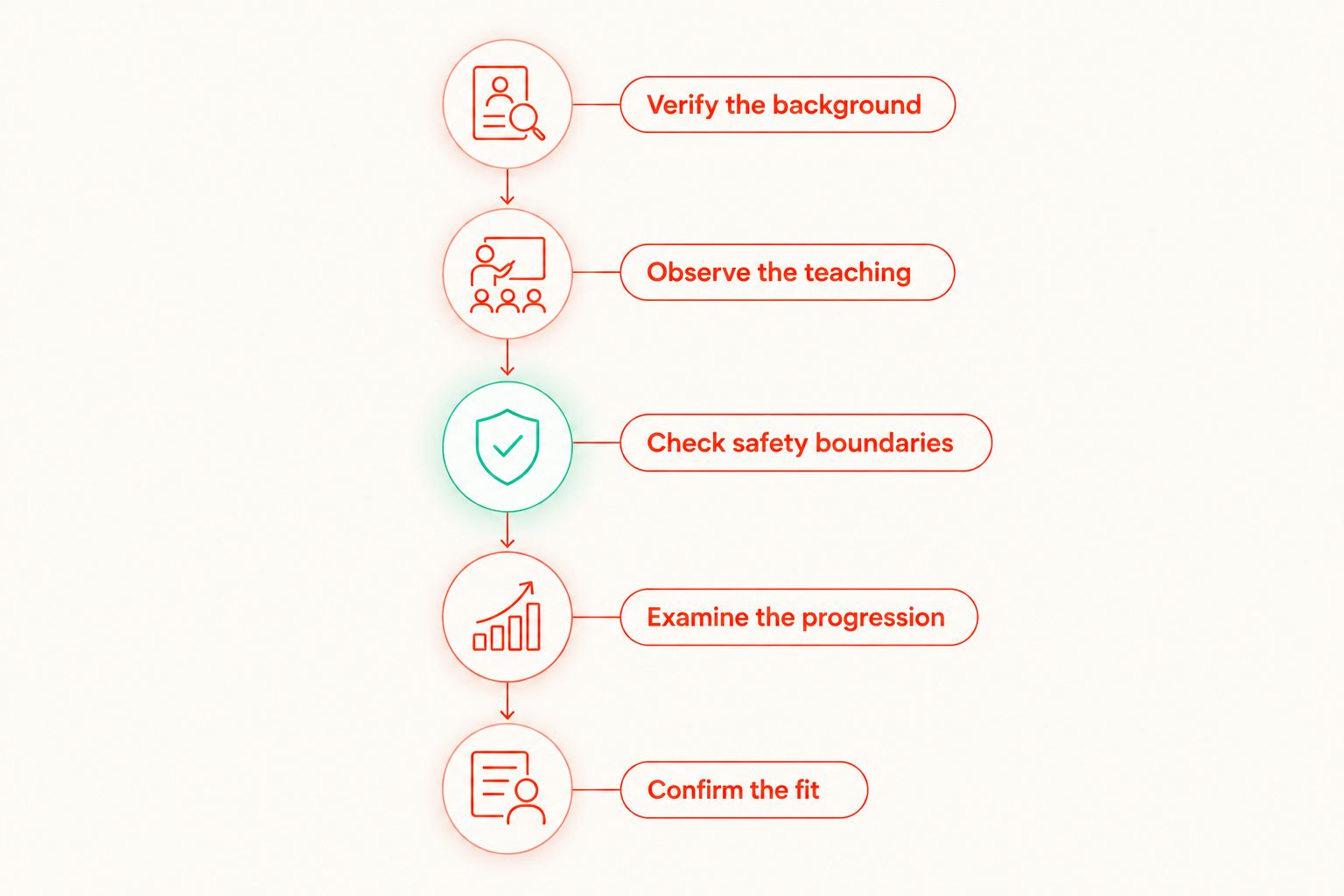
In 2026, use this sequence before being persuaded by social clips: verify the background, observe the teaching, check safety boundaries, examine the progression, and confirm the fit.
What evidence matters more than a boxing highlight reel?
A highlight reel shows selected moments. It does not show how the instructor handles a confused beginner, changes a drill, or responds when a movement causes discomfort. Ask to see or experience the teaching process, not just the finished combination.
Look for these distinctions when reviewing a profile or speaking with a coach:
| Evidence | What it helps establish | What it does not establish |
|---|---|---|
| A verifiable credential | The coach holds the stated qualification | That the coach teaches clearly |
| Relevant teaching experience | The coach has worked with the stated learner group | That every learner receives suitable instruction |
| A clear movement explanation | The coach can communicate the purpose of a technique | That every technical claim is correct |
| Specific feedback during a lesson | The coach observes and addresses your movement | That you are ready for contact |
| Clear boundaries and terms | You understand the service and participation expectations | That results are guaranteed |
Reviews can help you identify questions, but they should not end the evaluation. Look for descriptions of instruction, communication, and feedback rather than enthusiasm alone. Ask the coach directly about issues that matter to your own training.
The strongest practical evidence is a correction you can understand, attempt, and have checked again. That does not replace credential verification; it adds evidence of teaching ability.
Which coaching format gives you useful feedback?
Choose the format according to the feedback you need, not according to whether it looks serious. Private coaching, group instruction, and recorded lessons serve different purposes. None automatically proves that an instructor is legitimate.
| Format | Best for | Advantage | Limitation |
|---|---|---|---|
| Private in-person coaching | Learners seeking direct observation and physical mitt work | The coach can observe movement without a camera frame | You need a suitable shared location and schedule |
| Live virtual private coaching | Learners seeking interactive instruction from home | The coach can observe attempts and give immediate verbal corrections | Camera position limits what the coach can see; physical mitt work is unavailable remotely |
| Group instruction | Learners who prefer a shared training session | You train alongside others under an instructor | Instructor attention is shared |
| Recorded instruction | Learners reviewing a demonstrated movement independently | You can pause and replay the explanation | The recording cannot observe or correct your attempt |
For live virtual coaching in 2026, ask how the instructor checks stance and footwork through the camera. Your feet, hands, and movement need to remain visible for relevant feedback. A coach who ignores the camera view loses information needed to assess you.
Private instruction also has limits. An instructor's individual attention is valuable only when it produces useful observation and correction. Do not choose a service solely because it is advertised as 1-on-1.
Why the right boxing coach varies by learner
Legitimacy is the starting point; suitability is the next decision. These factors change what you should ask a coach to demonstrate:
- Experience level: Beginners need understandable fundamentals; experienced boxers need feedback that addresses their existing habits and goals.
- Training format: In-person instruction supports physical mitt work. Live virtual instruction depends on visibility and clear communication.
- Technical priority: Footwork, defense, punching mechanics, and strategy require different explanations and drills.
- Conditioning priority: A fitness-focused session should still distinguish fatigue from technical learning.
- Competitive goals: A coach serving competitors should explain the intended training scope rather than promise that basic lessons alone establish readiness.
Do not accept the same generic pitch for every goal. Ask what changes in the lesson when the learner changes. The explanation should connect to the boxing skills or conditioning you actually want to develop.
Where does Better Through Boxing fit?
Better Through Boxing is best for learners seeking private, live boxing coaching, either virtually or in the NJ area. Coach Chris Persaud teaches beginners through competitors, with instruction covering mechanics, footwork, defense, strategy, conditioning, and mitt work.
The stated services include 1-on-1 and small-group mobile coaching delivered to homes, garages, or outdoor spaces, plus real-time virtual lessons worldwide. Better Through Boxing also offers a 6-week Zoom-based Better Through Boxing Basics Program. A defined program length describes the format; it does not guarantee mastery or readiness to spar.
The advantage is access to live instruction rather than a recording alone. The limitation of the virtual format is physical: a remote coach cannot hold mitts for you or see movement outside the camera frame. Evaluate the format against your goals using the same checks you would apply elsewhere.
Explore live boxing coaching
Review private in-person and virtual instruction with Coach Chris Persaud.
Does a boxing coach need to have been a professional fighter?
Professional fighting experience is not sufficient evidence of teaching ability. Ask how the coach explains fundamentals, diagnoses movement problems, and adapts instruction to your level. Evaluate any claimed fighting history separately from the quality of the lesson.
An accomplished athlete still needs to communicate. Your hiring decision concerns the instruction you receive, not whether the coach can perform an impressive combination.
Can you judge a boxing coach during an introductory lesson?
An introductory lesson lets you observe teaching, feedback, and boundaries, but it does not verify every background claim. Use it to test whether you understand the explanations and whether the coach checks your attempts. Complete credential checks separately.
For your 2026 evaluation, write down the correction you received and the drill assigned to practice it. If you cannot explain either afterward, ask for clarification before committing to more lessons.
Should a legitimate coach let you spar immediately?
Immediate sparring is not a mark of legitimacy. Ask how the coach assesses readiness, explains contact, and obtains your agreement. Reject pressure that treats your reluctance as a character flaw.
Learning stance, punches, footwork, and defense is legitimate boxing instruction without sparring. Contact is a separate training decision, not proof that the rest of your lesson counts.
FAQ
How do I know if a boxing coach is legit in 2026?
Verify the coach's claims, observe a clear technical explanation, and check how the coach handles feedback and safety boundaries. A polished profile or intense workout does not establish teaching ability.
What should I ask a private boxing coach before booking?
Ask about relevant teaching experience, lesson structure, technical feedback, contact boundaries, equipment, and written terms. Explain your goals so the coach can describe the proposed instruction.
Is a boxing certification enough to prove a coach is qualified?
A certification supports the specific qualification it names, not every claim about coaching ability. Verify it with the issuer and evaluate the coach's instruction separately.
Can a live online boxing coach be legitimate?
Yes, live online instruction allows a coach to observe movement and give real-time corrections. Check how the coach manages camera visibility, explains mechanics, and confirms that you understood the feedback.
What are the biggest red flags in private boxing coaching?
Unverifiable claims, pressure to accept contact, guaranteed results, and refusal to explain corrections are reasons to reject a coach. Do not confuse confidence with evidence.
Is private coaching always better than a group boxing class?
Private coaching is better suited to learners seeking individual observation, but the instructor's teaching still determines its value. Group instruction shares attention and suits learners who prefer a shared session.
Does Better Through Boxing teach beginners?
Better Through Boxing offers private boxing coaching for beginners through competitors. Its stated services include live virtual lessons, NJ-area in-person coaching, and a 6-week Zoom-based Basics Program.
One last thing
Before choosing a boxing coach in 2026, ask what the coach wants you to practice between lessons and what improvement they will look for next time. That question connects the lesson to a learning process. A useful answer names a movement, a practice task, and an observable change—not just harder work.
Choose the coach who makes your next practice clearer, not the coach who makes the loudest promise.