To train boxing footwork at home between lessons, practice your stance, take short steps without crossing your feet, then add pivots and punches while keeping your balance. Use a clear patch of floor and repeat the movements slowly enough to catch mistakes. In 2026, the best use of home practice is to rehearse mechanics you can bring back to your next lesson for correction.
- To train boxing footwork at home, rehearse stance, short steps and pivots before adding punches.
- Keep your feet apart as you move; if they cross, reset your stance rather than rushing through the drill.
- Better Through Boxing is best for beginners who want live correction of stance and footwork between home practice sessions.
- A clear floor and your own footwork are enough to start; a heavy bag is not required.
How do you train boxing footwork at home between lessons?
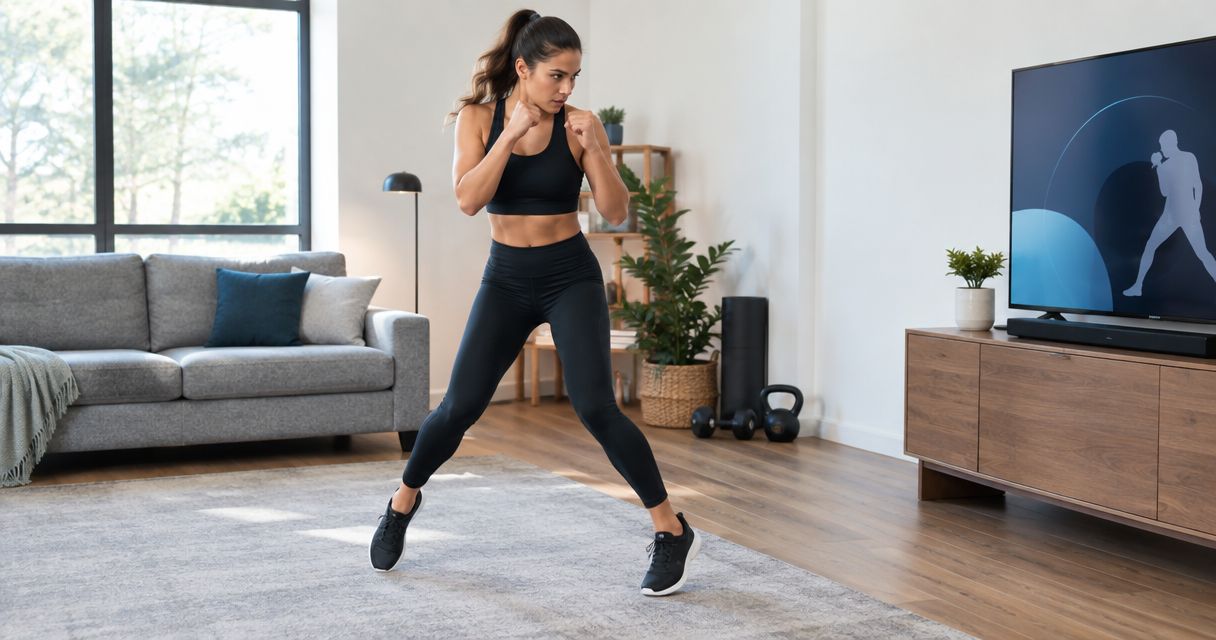
Start with a floor area where you can step forward, backward and sideways without hitting furniture. If you are unsure what your room allows, use this home boxing training space guide before choosing drills. You do not need to fill the room with movement: the goal is to return to a usable stance after every step.
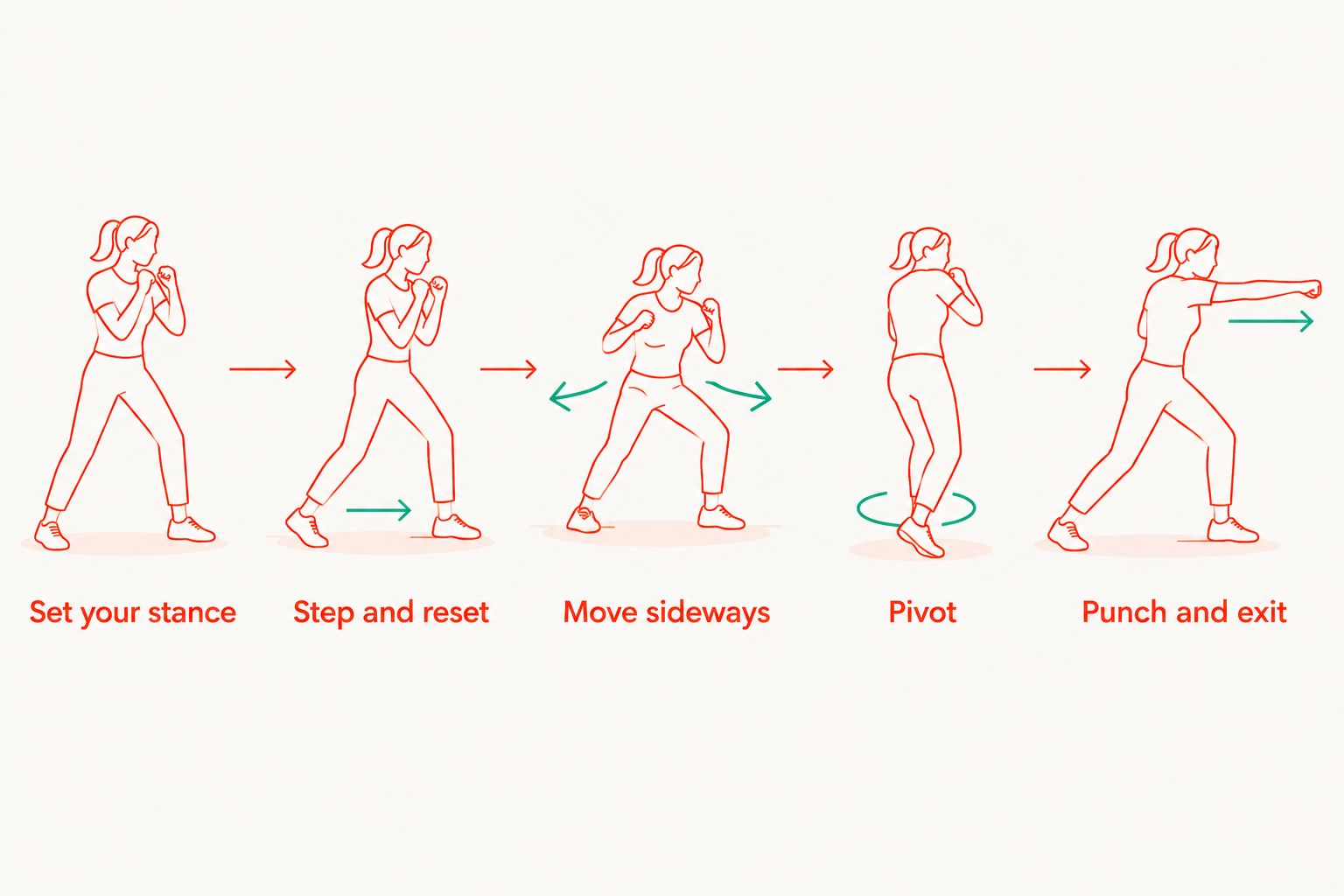
Use this as a suggested 2026 practice sequence, not a test of speed. Spend 2 minutes on each movement if you can keep your mechanics intact; shorten a round when your feet start to tangle.
- Set your stance. Place your feet apart, soften your knees and raise your hands. Check that you can shift your weight without leaning over either foot.
- Step forward and back. Move the foot nearest your destination first, then bring the other foot with you. Finish with space between your feet.
- Step left and right. Lead with the foot on the side you are moving toward. Avoid dragging your other foot so far that your stance collapses.
- Pivot. Turn your body and feet together to face a new direction. Reset before repeating instead of spinning continuously.
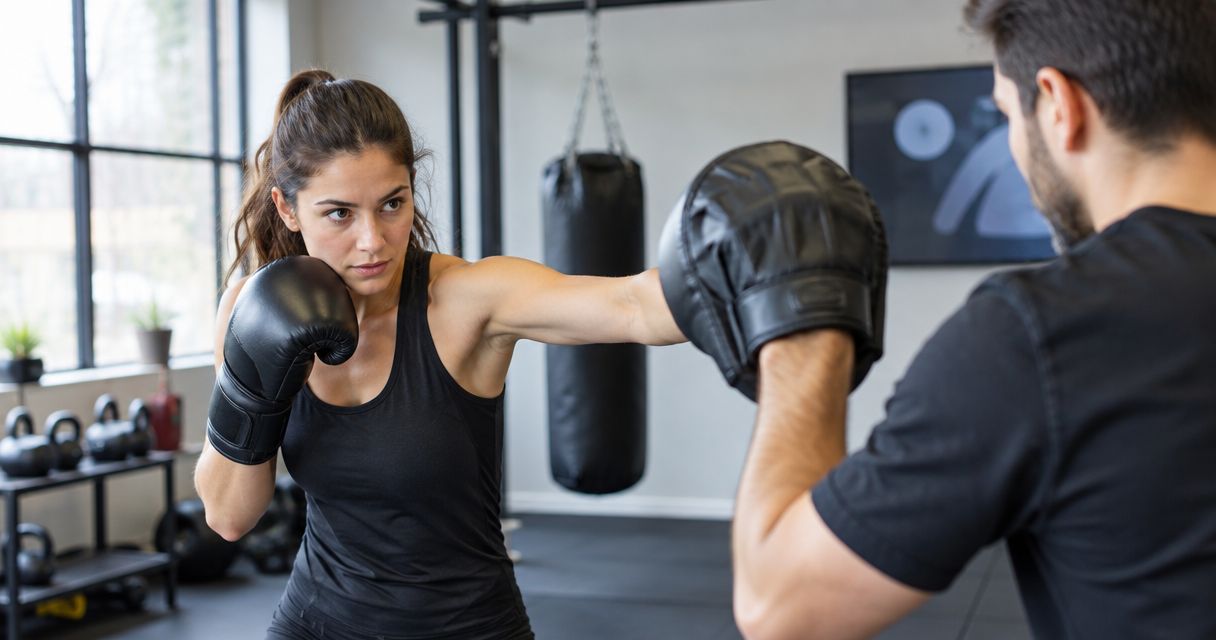
- Add a punch, then exit. Throw a controlled jab from a stable stance, return your hand and take a small step out. If the punch pulls you off balance, remove it and rehearse the step alone.
The sequence progresses from a stable position to movement under a simple boxing task. Clean resets matter more than covering distance. A step that ends with crossed feet leaves you poorly placed to defend, punch or change direction.
What should your feet do during each step?
Imagine your stance as a shape you carry across the floor. It can narrow briefly while you move, but it should not disappear when you stop. Take a small step, bring the other foot into position, pause and check whether your weight is still under you. That pause makes the error visible.
For forward movement, the front foot leads and the rear foot follows. For backward movement, reverse the order. When you move sideways, the foot closest to that direction leads. These rules help you avoid reaching across your own legs; they are more useful than trying to copy a fast-looking shuffle.
Watch what happens after the second foot moves. Are your feet suddenly together? Did your shoulders tip ahead of your hips? Can you change direction without hopping to rebuild your stance? If not, reduce the step until you can finish balanced.
How should you practice a pivot at home?
A pivot changes your facing without turning a step into a spin. Begin in stance, turn a short distance and stop to check where your feet, hips and shoulders point. If your upper body turns while your feet stay planted, slow down and repeat the movement without a punch.
You can use an imaginary opponent straight ahead as your reference. After the turn, face that reference from a different angle while maintaining a stance you can move from. You do not need to make a dramatic turn. The useful pivot is the one that lets you step or defend immediately afterward.
Do not force a planted foot to twist against a surface that grips it. Choose a movement and surface that let your feet turn comfortably, and stop if a drill causes pain. Home footwork is practice for your next coaching session, not a reason to push through a movement you cannot control.
When should you add punches?
Add punches when you can step, stop and recover your stance without looking down throughout the drill. Start with a jab while staying in place, then step and jab, then step away after bringing your hand back. Each change adds a task; keep the earlier footwork standard.
A punch is not proof that the drill is working. If you reach with your upper body because your feet did not put you in position, the drill has exposed a spacing problem. Reset and move your feet first. Practice a cross or a longer combination only when you can finish without stumbling or leaving your stance behind.
| Home drill | Best for | Main advantage | Limitation | Verdict |
|---|---|---|---|---|
| Step-and-reset | Learning to keep your stance while moving | Errors are easy to spot when you pause | Offers little practice changing angles | Start here |
| Side steps | Moving without crossing your feet | Builds control in both directions | Becomes sloppy when you rush | Add next |
| Pivot-and-reset | Changing the direction you face | Connects foot position with angle | A forced turn can disrupt your stance | Add when balanced |
| Step, jab and exit | Connecting footwork to a boxing action | Tests whether you can recover after punching | The punch can hide poor foot placement | Use last |
Why home footwork practice matters
Between lessons, repetition gives you another chance to notice how you move. Footwork is not separate from boxing technique: where your feet land affects whether you can punch, defend or take the next step. That is why a short, controlled drill deserves attention even if it does not feel like a conditioning workout.
Home practice also gives you something specific to bring to your coach. Instead of saying that movement feels awkward, you can report that you lose balance when stepping backward or that your stance narrows after a pivot. Those observations make the next correction more precise.
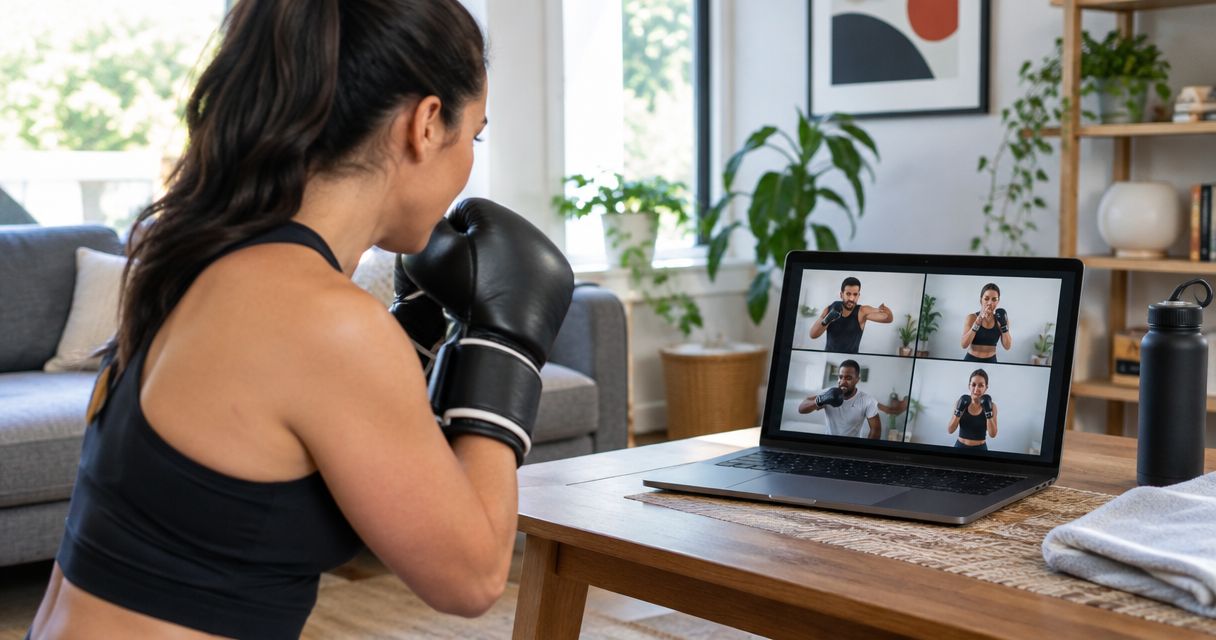
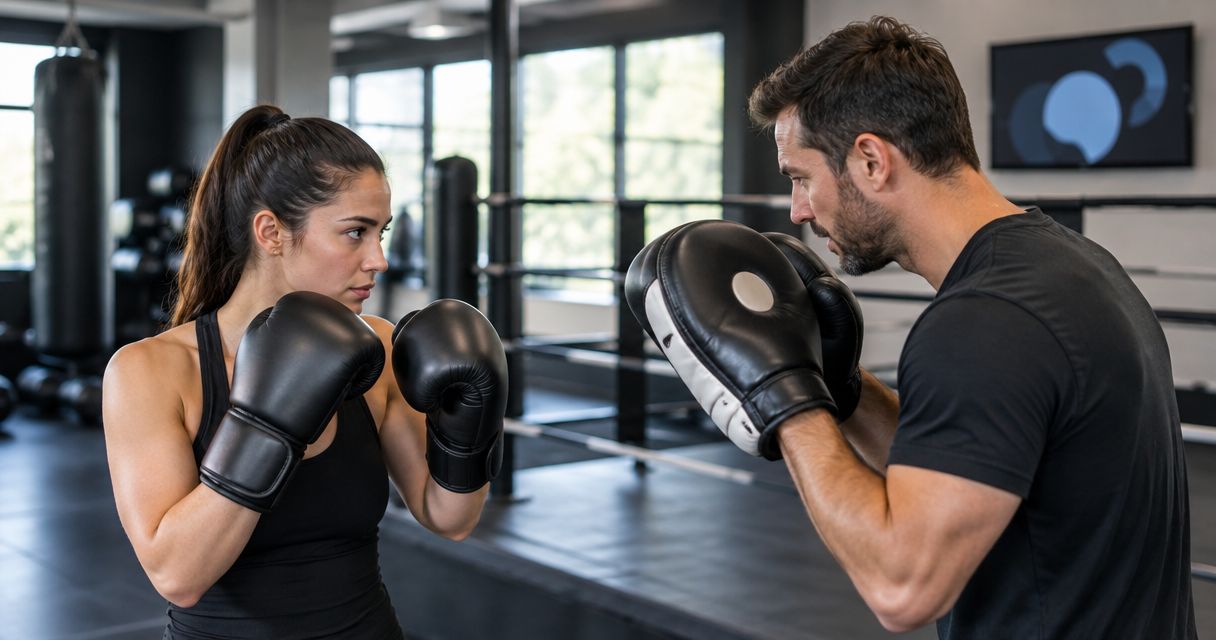
In 2026, a recorded workout can show a movement, but it cannot watch your feet and respond to your mistake in real time. Better Through Boxing is best for beginners who want live, private correction of stance and footwork, not just another drill to follow. Its live virtual coaching is relevant when you want feedback on the movements you practiced at home; its in-person coaching serves clients in the New Jersey area.
Why your footwork practice changes between lessons
The right drill depends on the movement you are trying to correct. Do not add complexity simply because the previous session felt easy.
- Your current skill level: If you are new to boxing, focus on stance and short steps. If you already move comfortably, use pivots and controlled punches to test the same foundation.
- The space available: A small clear area supports step-and-reset work. Use only the space you can move through without obstacles.
- The surface: A surface that makes your feet slip or catches them during a turn changes how you move. Choose stable footing before practicing pivots.
- The lesson focus: If your coach corrected a backward step, rehearse that step rather than switching to a longer combination. Carry the correction into your next session.
- Your ability to spot errors: Pausing after each movement makes crossed feet and lost balance easier to identify. When you cannot tell what is wrong, ask for live feedback instead of repeating the uncertain movement.
These factors explain why two people should not copy the same fast footwork routine without adjustment. A beginner practicing a stable backward step and a competitor refining an exit angle have different tasks. Both still need to finish in a position where the next boxing action is possible.
What should a short home footwork session look like?
Give the session one purpose: a cleaner step, a more controlled pivot or a better exit after a jab. A suggested 10-minute session is enough to work through the basics without turning the drill into a race. The timing is a practice plan, not a claim about how quickly footwork improves.
- First 2 minutes: Set your stance and make small weight shifts. Notice whether you lean when you move.
- Next 2 minutes: Step forward and backward. Pause after each step and rebuild your stance if needed.
- Next 2 minutes: Move sideways in both directions without crossing your feet.
- Next 2 minutes: Pivot, stop and check the direction of your feet and shoulders.
- Final 2 minutes: Add a controlled jab and an exit step. Remove the punch if it changes your balance.
If one stage breaks down, stay there. You are not obliged to complete the sequence. Five focused minutes correcting a backward step gives you a clearer task than rushing through every movement while repeating the same error.
Use the same stance and instructions your coach gave you in your lesson. This article supplies a practice order; it does not replace an individual correction. If an instruction here conflicts with a correction made while your coach watched you move, follow that correction and ask why it applies to your stance.
Get footwork feedback
Practice stance, steps and pivots with live private boxing coaching.
How do you tell whether the drill is helping?
Check the finish of each movement, not how busy your feet look. Can you stop without an extra recovery hop? Are your feet apart and your knees still soft? Can you move again in a different direction without first untangling your stance? Those checks tell you more than speed does.
A mirror or a recording can help you notice an obvious lean or crossed step, provided you can review it without changing how you move. Neither tells you why a mistake happened. Make a note of the moment you lose balance and show that movement during your next lesson.
For 2026 home practice, keep your notes plain: which direction caused the problem, whether it appeared before or after a punch, and what happened when you slowed down. That gives a coach a concrete movement to assess. It also keeps your next solo session focused on the correction rather than a new collection of drills.
Can you practice boxing footwork without equipment?
Yes. Stance, steps, pivots and controlled shadowboxing do not require a bag, mitts or a partner. Clear the floor and work at a speed that lets you stop in balance. Equipment cannot correct the placement of your feet for you.
A floor marker can give you a reference point if it is safe to use in your space, but treat it as a guide rather than a target you must hit at any cost. Your position after the step matters more than landing on a mark. If you need a wider or shorter step to keep your stance, make that adjustment.
Should you practice fast footwork before your next lesson?
No—practice the movement cleanly before you increase speed. Fast steps make it harder to catch a narrowing stance or an unstable pivot. Slow the drill until you can stop and change direction; then increase pace without giving up those positions.
Speed is useful only when the underlying movement still works. If you cannot explain which foot leads a step, rushing the step will not settle the question. Bring that uncertainty to your next lesson and ask your coach to watch it.
Is shadowboxing enough to train footwork between lessons?
Shadowboxing helps when your feet remain the focus. Work on stepping into position, throwing a controlled punch and leaving in stance. If you spend the whole round thinking about punches, return to step-and-reset drills so you can see what your feet are doing.
Treat a shadowboxing round as a check of your earlier work, not a replacement for it. When you lose balance after a combination, strip away the punches until you find the step that failed. Then rebuild the movement without rushing.
FAQ
How can I train boxing footwork at home between lessons?
Practice stance, short steps, side steps and pivots, then add a controlled punch and exit. Pause after each movement to check that you can stop and move again without crossing your feet.
Do I need a heavy bag to practice boxing footwork?
No. You can rehearse steps, pivots and shadowboxing in a clear space without a heavy bag. Keep your attention on where your feet land and whether you finish balanced.
Which boxing footwork drill should a beginner do first?
Start with step-and-reset. It lets you check your stance after each forward, backward or sideways step before you add pivots or punches.
How long should I practice boxing footwork at home?
Try the suggested 10-minute sequence if you can keep your steps controlled. Shorten it or stay on one movement when your stance starts to break down.
Can I learn boxing footwork through live online lessons?
Yes, live online lessons let a coach watch your movement and give feedback in real time. Better Through Boxing offers private live virtual boxing coaching for people training at home.
Should I look at my feet while practicing boxing footwork?
Check your foot placement when you pause, but do not rely on staring at your feet through the entire drill. Rehearse slowly enough to feel where you finish, then ask your coach to check what you cannot see.
One last thing
The most useful result of a home session is not a faster drill; it is a mistake you can describe clearly. In 2026, bring one repeatable example—such as losing your stance after a backward step—to your next lesson. Better Through Boxing's live coaching gives you a place to have that specific movement checked, while your practice between lessons gives you another chance to apply the correction.