There is no fixed number of weeks to see progress in boxing training. In 2026, the useful measure is whether you can repeat a skill with sound mechanics, not whether a calendar says you should be ready. A 6-week program gives you a defined period for practice and review, but its length does not guarantee a particular result.
- How many weeks to see progress in boxing training? There is no fixed count; judge repeatable technique instead.
- Better Through Boxing is best for beginners who want live feedback on stance, footwork, defense, and punches.
- Use a 6-week program as a review period, not a deadline for mastering boxing.
- Track what you can perform consistently, including your stance after punching and your balance during a pivot.
How many weeks until you see progress in boxing training?
No specific week marks progress for every boxer. Use the table below to decide what to check during training in 2026. It separates a skill you can observe from a milestone you cannot infer from time alone.
| What you are working on | Progress you can observe | What elapsed weeks cannot prove |
|---|---|---|
| Stance | You return to a balanced position after punching or moving. | That your stance will hold up under pressure. |
| Footwork | You move and stop without crossing your feet or losing your base. | That you can control distance against an opponent. |
| Core 4 punches | You can throw the instructed punch and reset without abandoning your stance. | That you are ready to throw combinations at speed. |
| Defense | You can slip or cover on a clear cue while staying balanced. | That you are ready to defend in sparring. |
| Conditioning | You can complete the drills assigned to you while following the mechanics your coach asks for. | That fitness gains equal boxing skill. |
The answer for 2026 is a skill check, not a week count. Record the skill you are practicing, what breaks down, and whether you can correct it when prompted. If you can perform a movement once but cannot repeat it, you have found the next thing to train—not a reason to declare the training ineffective.
Why this matters
A beginner can feel fitter while still stepping out of stance after every punch. The reverse also happens: a cleaner pivot or steadier guard might be visible to a coach before you feel a dramatic change in conditioning. Those are different forms of progress, and each needs its own test.
Better Through Boxing provides private boxing coaching with live feedback, virtually and in the NJ area. That makes it relevant when you want someone to assess your mechanics rather than judge progress by how tiring a session feels. Better Through Boxing is best for beginners who want live correction of real boxing technique; it is not a shortcut to a guaranteed week-by-week result.
What should you check from one boxing lesson to the next?
Choose one movement before you start. A useful check has three parts: the task, the error you are watching for, and the correction you will practice. “Get better at boxing” gives you nothing specific to assess; “keep my stance when I step and throw a jab” does.
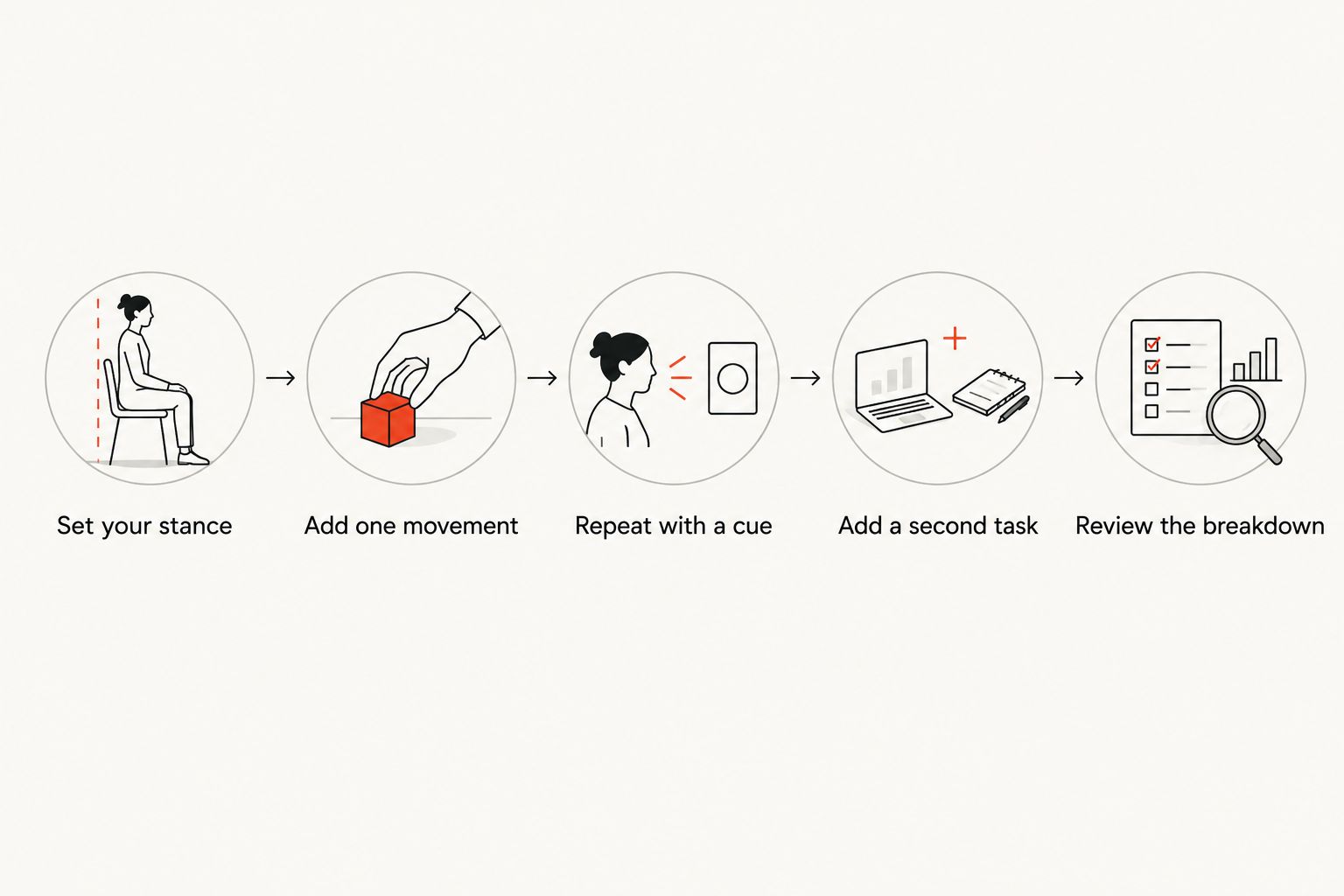
- Set your stance. Check your balance before adding a punch. If your feet are not in a position that lets you move again, fix that first.
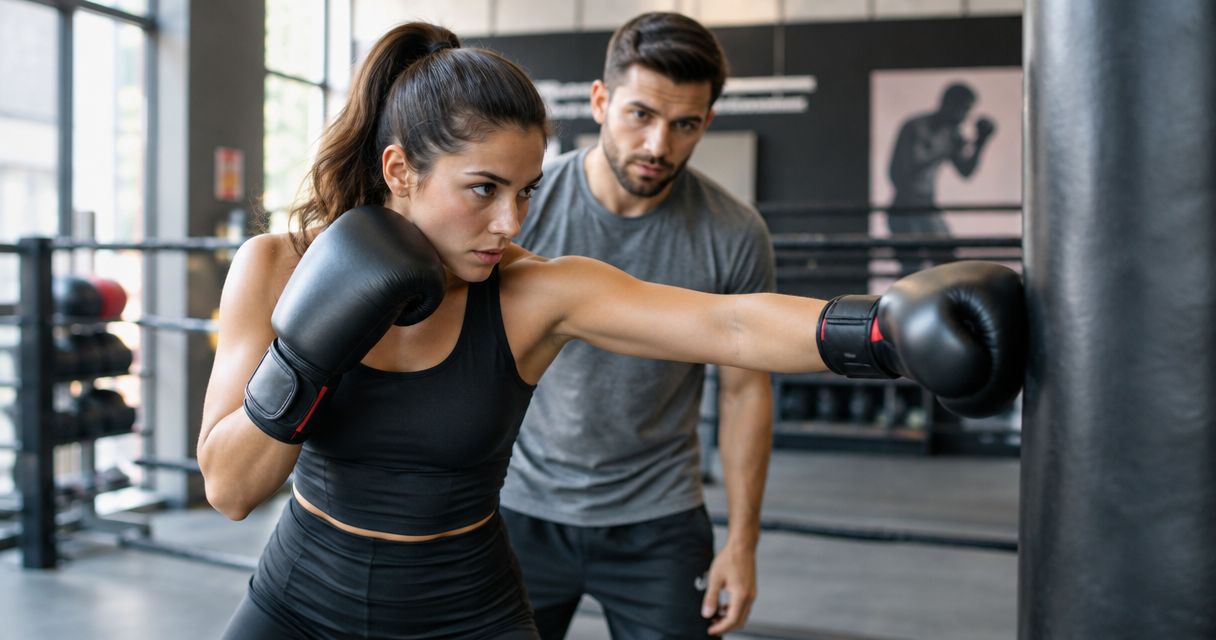
- Add one movement. Step, pivot, punch, or slip on its own. Pay attention to where your feet and hands finish, not just where they start.
- Repeat with a cue. Have a coach give the cue during a live lesson, or use the same clear prompt each time you practice. Watch whether the movement changes when you have less time to prepare.
- Add a second task. Try moving after the punch or returning to your guard after the slip. Check whether the first skill survives the addition.
- Review the breakdown. Name what changed: crossed feet, lost balance, dropped hand, or a punch that stopped you from moving. Give that error your attention in the next session.
This sequence measures control, not just completion. In 2026, a practice note that names one recurring error is more useful than a note that only records that you finished the workout.
You do not need to turn every lesson into an exam. Pick a single focus so you can tell your coach exactly what felt different. A coach can then distinguish a movement you understand from one you can repeat when another task is added.
What can a 6-week boxing program tell you?
A 6-week program gives you a defined training period, not a universal timetable for learning boxing. The Better Through Boxing Basics Program is described as Zoom-based, with live private coaching. For a beginner, that format creates opportunities to practice a skill, receive a correction, and revisit the same skill later in the program.
Use the end of the 6 weeks to compare how you perform a movement with how you performed it when you began. Ask concrete questions: Can you set your stance without a reminder? Does your balance change when you add a punch? Can you explain the correction you are working on? Those questions tell you more than a claim that you should have “learned boxing” by a certain date.
The advantage of a scheduled program is focus: it gives you a period in which to work on basics and review them. The limitation is equally clear. Completing the program does not, by itself, establish sparring readiness, competitive ability, or mastery of defense. Those require separate assessment of the relevant skills; a program end date cannot provide it.
Why does the time to see boxing progress vary?
The count of weeks varies because “progress” can describe different tasks. A better jab, steadier footwork, improved conditioning, and sparring readiness are not interchangeable outcomes. In 2026, define the outcome before you ask how long it takes.
- Your starting skill. A complete beginner is learning how to set a stance; a more experienced boxer might be correcting how a pivot fits into an existing sequence. Those are different assignments.
- The movement you are measuring. Recognizing a punch on command is different from throwing it while moving and returning to position.
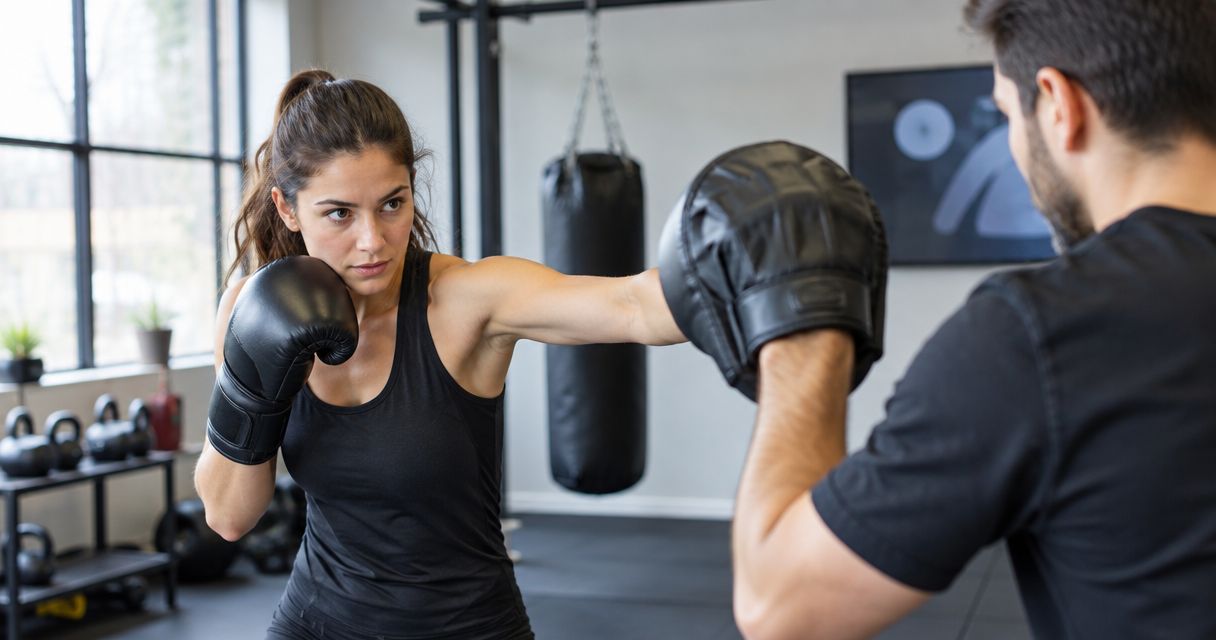
- Whether someone can see the error. Live coaching gives a trainer a chance to identify a dropped hand, an unstable step, or a missed cue while you practice. Solo work puts more of that observation on you.
- How often you revisit the skill. Repeating a lesson’s focus gives you a clearer comparison than changing your entire practice goal each time. Consistency does not promise a particular outcome, but it makes changes easier to assess.
- What happens when you add a task. A slip that looks controlled on its own might change when you move first. Assess the combined task rather than counting the isolated movement as finished.
- Your definition of success. If your goal is conditioning, measure the drills you can complete while maintaining the required mechanics. If your goal is defense, check the defensive movement itself.
These factors explain why someone else’s timeline is a poor target. They also give you a way to make your next lesson specific: tell your coach which movement you want assessed and under what conditions it falls apart.
Is live coaching different from practicing alone?
Yes. Both approaches give you time to practice, but they give you different ways to identify mistakes. Neither has a fixed week count for progress, and neither turns a single clean repetition into a mastered skill.
| Training approach | Best for | Main advantage | Main limitation |
|---|---|---|---|
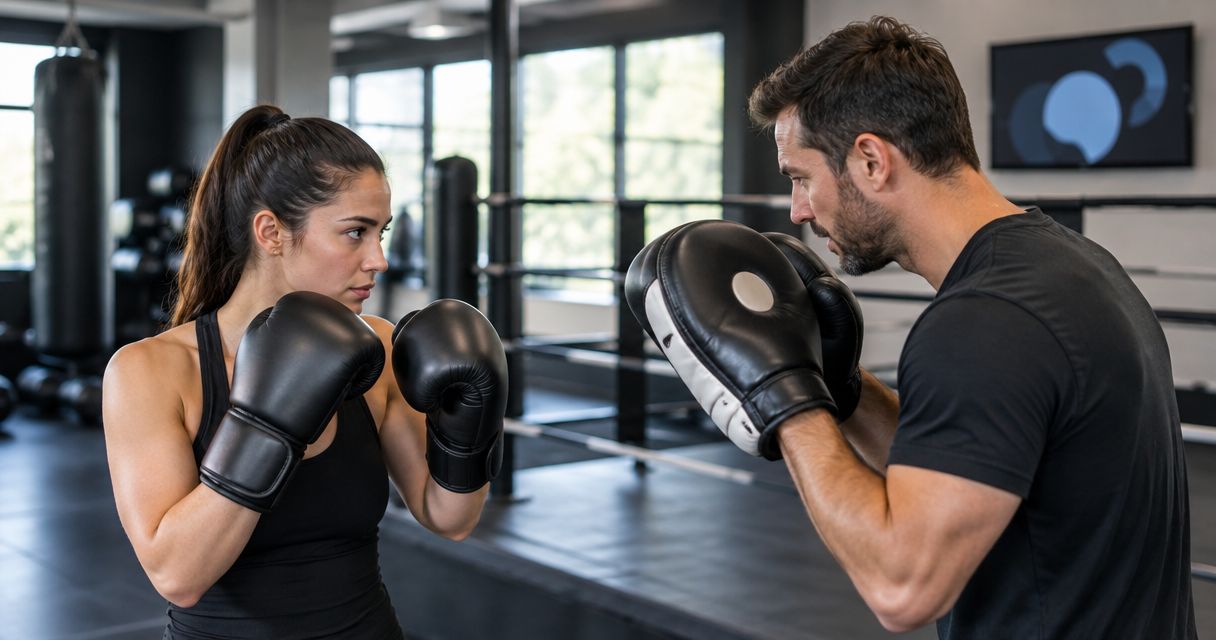
| Live private coaching | Someone who wants direct feedback on a specific movement | A coach can watch the movement and give a correction during the lesson. | You still need to practice and revisit the correction; attendance alone is not progress. |
| Solo practice | Someone rehearsing a skill they already know how to check | You can focus on a narrow task, such as setting stance and resetting after a punch. | It is harder to spot an error you do not know to look for. |
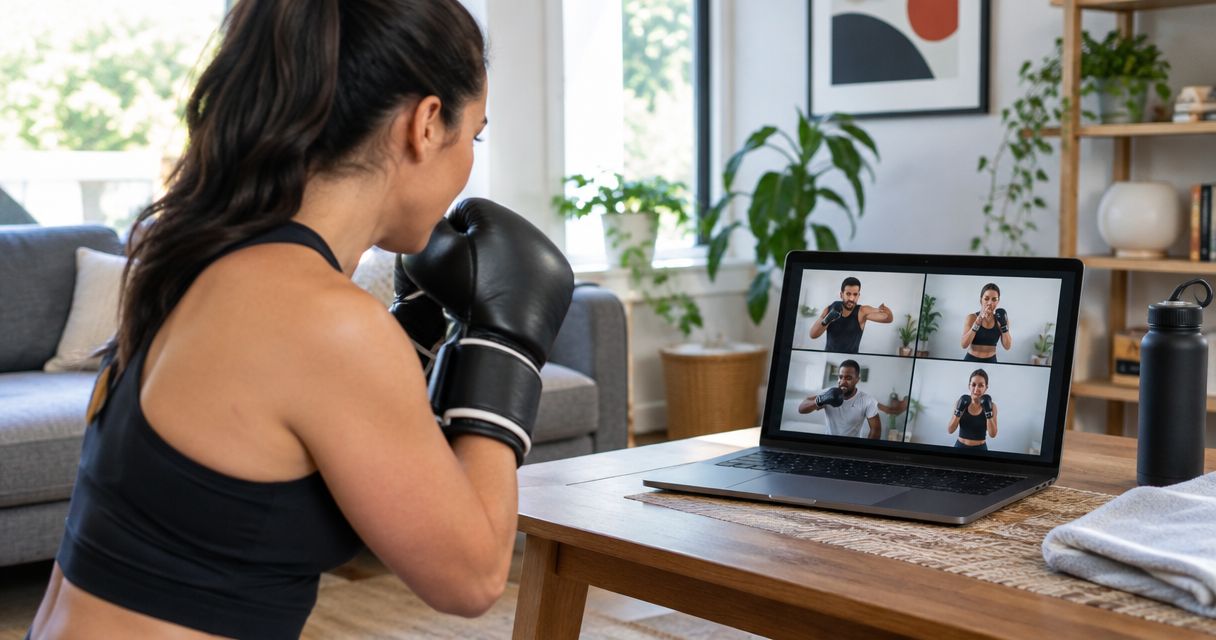
Better Through Boxing offers live virtual lessons and in-person NJ-area coaching. Its private format suits a beginner who wants feedback on stance, footwork, defense, and punching mechanics. It does not remove the work of practicing between corrections, and virtual instruction is not the same as having a coach physically present to assess an in-person task.
If you practice alone, make the task smaller rather than trying to cover every boxing skill at once. Work from a clear instruction you have received, then bring the recurring problem back to a live lesson. The useful question is not which option feels harder; it is which option helps you identify and correct the movement you are training.
Does feeling fitter mean your boxing technique is improving?
Not necessarily. Conditioning and technique overlap during a boxing workout, but they answer different questions. Finishing a demanding drill tells you that you finished it; it does not show whether you kept your stance, recovered your guard, or moved with control.
Check both when both matter to your goal. After a conditioning drill, ask whether the final movements still followed the instruction. If you were working on footwork, assess your feet. If you were working on a slip, assess your balance and where your hands finished. This keeps a workout from disguising an error that needs attention.
Better Through Boxing includes conditioning alongside instruction in boxing mechanics. That combination is useful when you want fitness work connected to a technique goal, but the two outcomes still need separate checks. In 2026, use effort to describe the workout and repeatable movement to describe technical progress.
Can you tell whether you are ready to spar from the number of weeks?
No. Weeks spent training do not establish sparring readiness. A boxer who can follow instructions during a controlled drill has demonstrated that drill, not every defensive decision needed with another person in front of them.
Ask your coach to assess the actual skills involved before treating sparring as the next calendar milestone. Can you keep your stance when the task changes? Can you defend on a cue without losing balance? Can you follow instructions when a drill becomes more complex? An honest answer can include work still to do.
Sparring is also a different goal from learning boxing for fitness. You do not need to use it as the test for every kind of progress. If your goal is to improve a jab, movement, or defense during instruction, assess that task on its own terms.
What should you do if progress feels slow?
Make the skill smaller and ask for a specific correction. “My footwork is not improving” is difficult to act on; “I lose my stance when I pivot after a jab” gives your coach a movement to inspect. In 2026, that is a more useful next step than searching for a universal deadline.
Bring a short account of what happened during practice: the cue, the movement, and where you lost control. Then rehearse the correction without immediately adding speed or more tasks. Once you can recognize the error, you have a clearer way to check the next attempt.
Do not mistake changing goals for lack of progress. If one lesson focuses on stance and the next focuses on slipping, compare each skill with its own earlier attempt. A single overall verdict—better or worse—can hide a useful change in one part of your boxing.
FAQ
How many weeks to see progress in boxing training?
There is no fixed number of weeks to see progress in boxing training. Check whether you can repeat a specific movement with sound mechanics rather than using elapsed time as proof.
Will I see boxing progress after 6 weeks?
A 6-week program gives you a point at which to review your work, not a guaranteed result. Compare specific movements, such as your stance after punching or your balance during a pivot, with your earlier attempts.
What counts as progress for a boxing beginner?
Progress for a beginner is a specific improvement you can repeat, such as returning to stance after a punch. A coach can help identify whether the movement holds up when you add a cue or another task.
Does boxing fitness mean I am getting better at boxing?
No; completing harder conditioning work does not by itself prove better boxing technique. Check footwork, guard, balance, and the assigned movement separately from workout effort.
Can I measure boxing progress in a virtual lesson?
Yes; a live virtual lesson lets a coach watch visible movements and give feedback on tasks such as stance, footwork, and punches. The assessment is limited to what the coach can see and the task you perform.
Am I ready to spar after a set number of weeks?
No; a set number of weeks does not establish sparring readiness. Ask a qualified coach to assess your defense, balance, and response to changing instructions before treating sparring as a next step.
What should I do when my boxing progress feels slow?
Choose one movement and describe the exact error you keep making. Work on the correction, then check whether you can repeat it before adding another task.
One last thing
The most useful sign of progress might be a mistake you can finally name. If you can tell your coach, “I lose my stance after the jab,” you have a precise task for the next lesson. In 2026, that beats reaching an arbitrary week and still not knowing what to fix.