Yes. Adults can start boxing and work toward competition in 2026. The route is to learn sound mechanics, build conditioning, spar under qualified supervision, and confirm eligibility for a suitable event; starting lessons alone does not make you ready for a bout.
- Yes, adults can start boxing and compete; readiness depends on skill, supervised sparring, and event eligibility.
- Better Through Boxing is best for adults seeking live instruction in real boxing technique, not a guaranteed competition date.
- Virtual boxing lessons can build fundamentals, but they cannot replace in-person sparring.
- Ask a prospective coach how they assess readiness before you commit to a bout.
Why this matters
A boxing workout and a boxing match ask different things of you. A workout can develop your stance, footwork, punches, and conditioning without an opponent trying to hit you. Competition adds distance, defense, decision-making, and the ability to keep your mechanics under pressure.
If your first question is whether age alone rules you out, the answer is no. The more useful question is whether you can train consistently, practice safely with a partner, and meet the rules of an event open to you. For the starting point rather than the competition route, read is it too late to start boxing as an adult.
Can you start boxing as an adult and still compete?
Yes, but treat competition as a separate goal from learning to box. In 2026, an adult beginner needs a training route that eventually includes supervised work with another boxer. A coach can teach you to move and defend; an event organizer determines whether you meet that event’s requirements. Neither a class completion nor a coach’s encouragement replaces those checks.
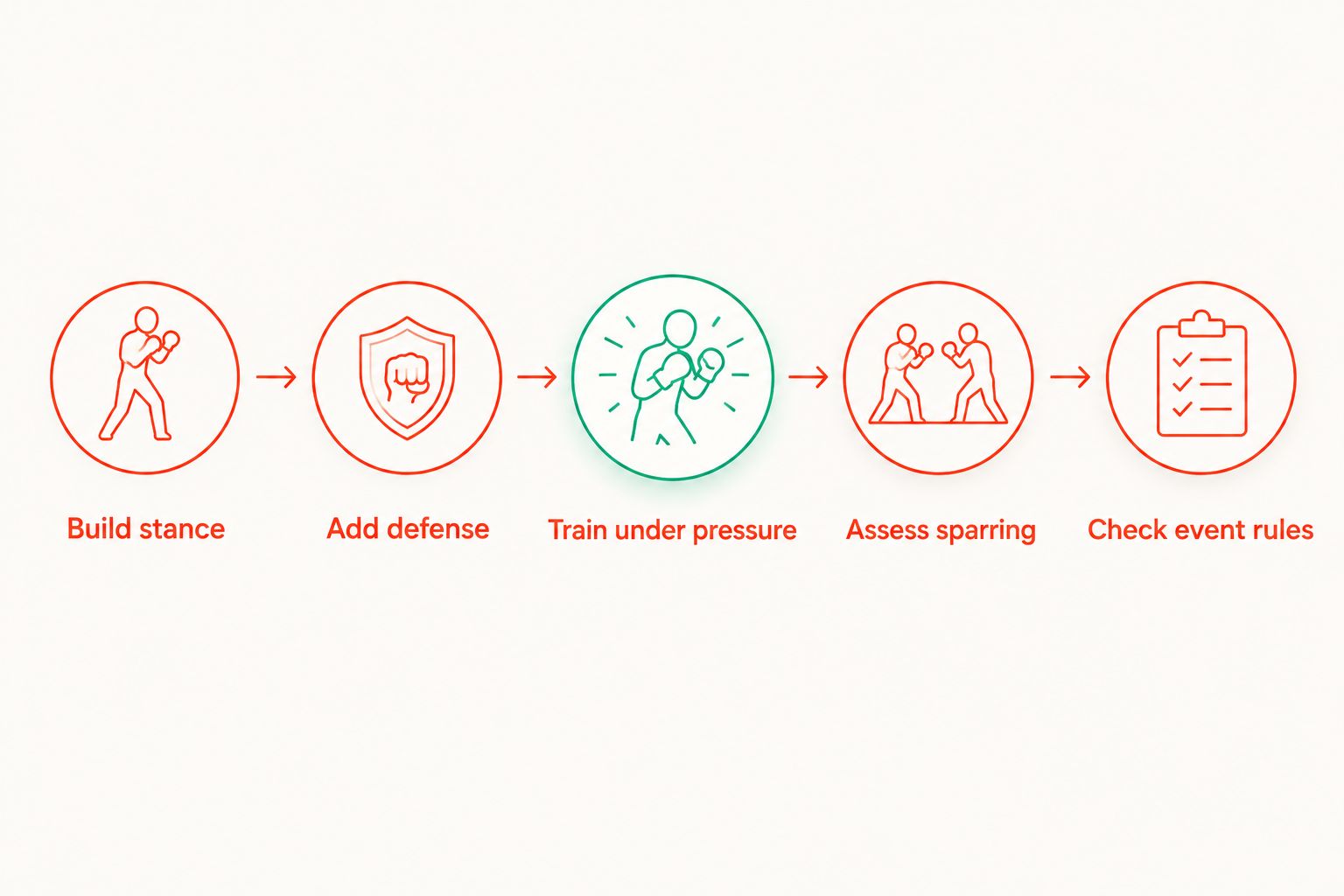
Follow the steps in order:
- Build stance. Establish a balanced position you can return to after punching, moving, or defending. If your feet come together when you step, correct that before adding speed.
- Add defense. Practice keeping your hands in position, slipping with control, and moving your feet after an exchange. A punch combination is not complete if you cannot defend what follows.
- Train under pressure. Use coached partner drills to practice distance and timing. The aim is to make decisions while another person moves, not to prove toughness.
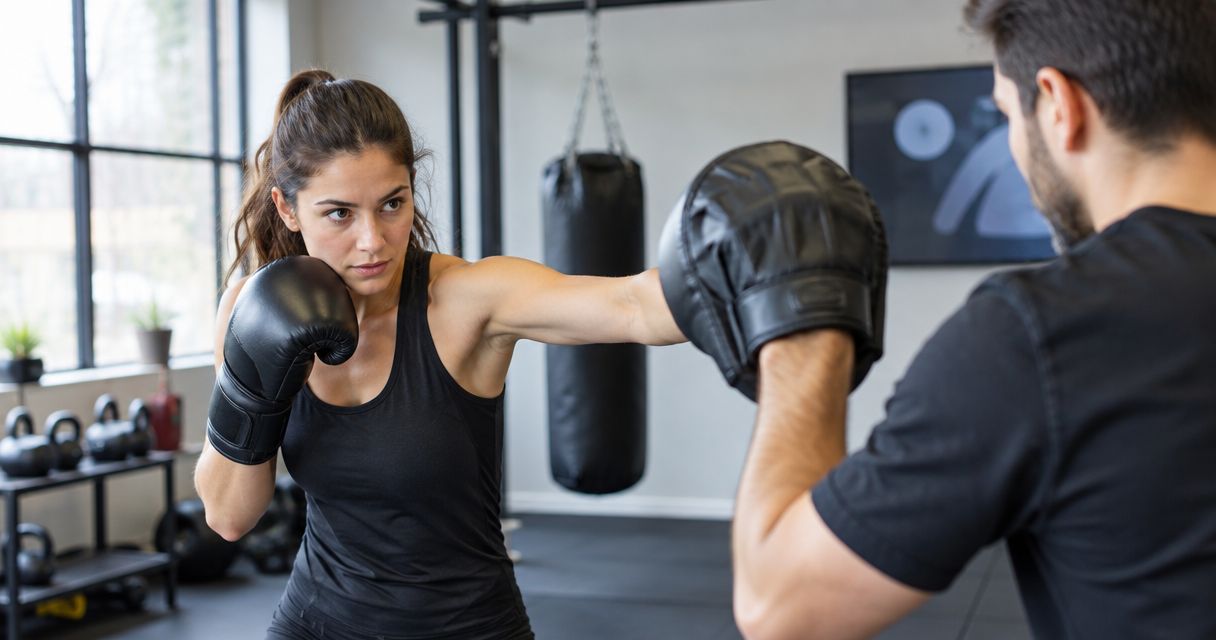
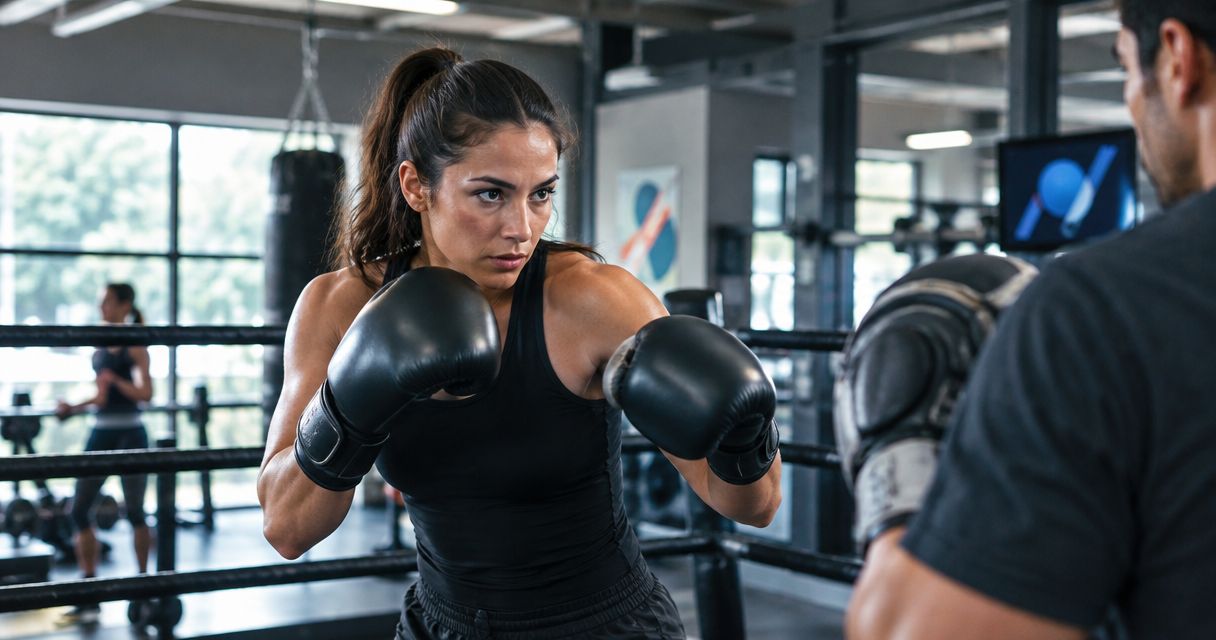
- Assess sparring. Move into supervised sparring only when your coach judges your control, defense, and composure suitable. Sparring is practice with a purpose, not a contest to win in the gym.
- Check event rules. Before seeking a bout, ask the organizer about eligibility, age grouping, registration, medical requirements, and matching. Confirm the requirements for the particular event rather than relying on a general answer online.
A beginner does not need to spar on day one to take competition seriously. The early work gives your coach something concrete to assess: can you hold your stance, manage distance, follow instructions, and protect yourself when the drill changes? If those skills break down, the next move is more coached practice, not a fight date.
What should your first coach know about your goal?
Tell the coach you want to compete eventually, even if your first session focuses on stance. That lets them distinguish recreational conditioning from preparation for partner drills and sparring. Ask how they correct footwork, teach defense, introduce contact, and decide when a beginner is ready for the next stage.
Listen for a process, not a promised date. A coach who can explain what they need to see in your balance, control, and reactions gives you usable feedback. You should also know where supervised partner work would happen; private solo lessons and live video sessions cannot supply a sparring partner by themselves.
In-person or virtual coaching: which helps you compete?
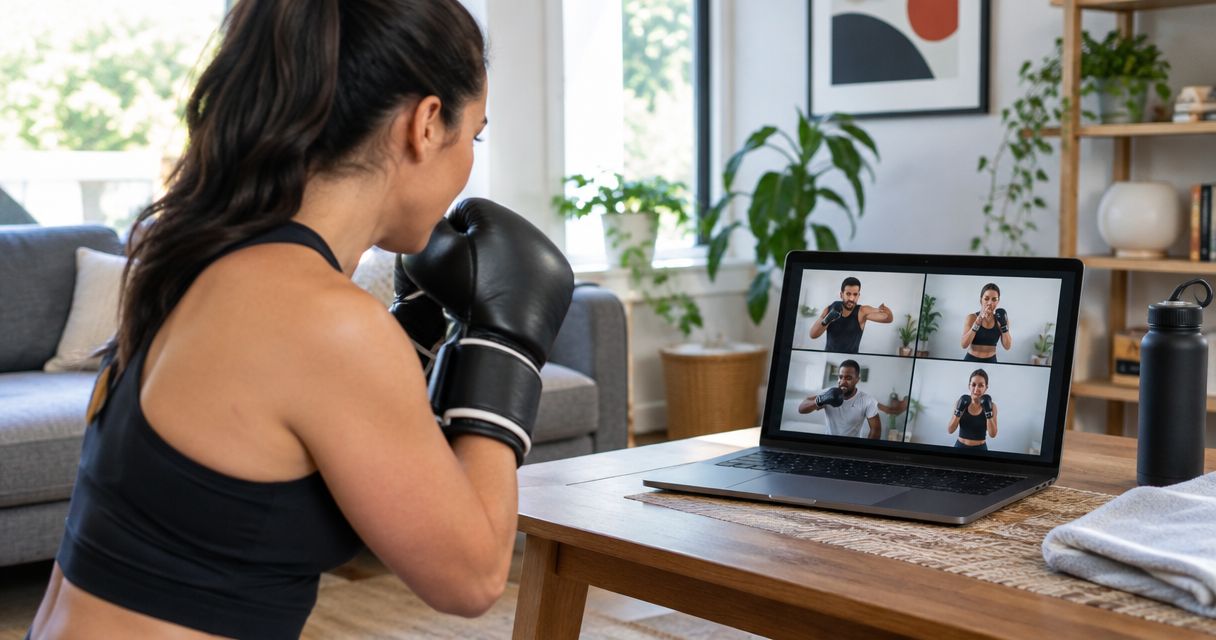
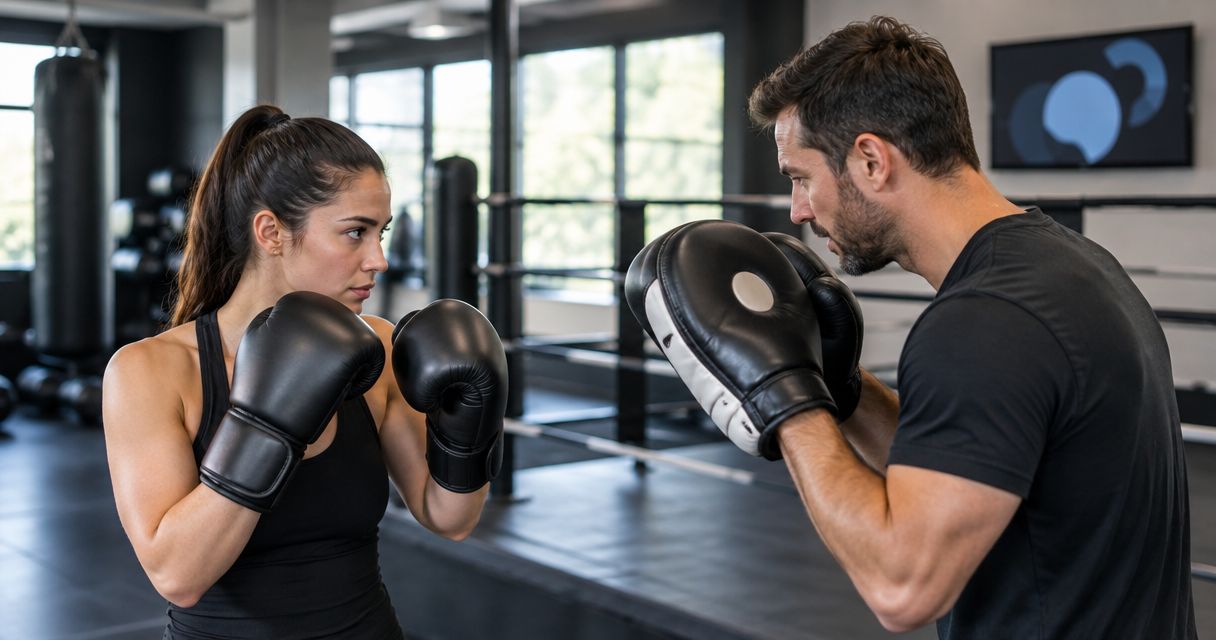
Both can teach technique, but they serve different parts of the route. Live virtual instruction lets a coach watch and correct your movement while you train from home. In-person coaching allows a coach to work with you directly on distance, partner drills, and, where appropriate, supervised sparring. Neither format alone guarantees an eligible match.
| Training option | Best for | What it does well | What it cannot do alone |
|---|---|---|---|
| Live virtual coaching | Adults building stance, footwork, and mechanics at home | Gives real-time instruction and corrections | Provide in-person sparring or establish bout eligibility |
| In-person coaching | Adults preparing for partner drills and contact | Allows direct observation of distance and reactions with another person | Guarantee that an organizer will approve or match you |
| Solo workouts | Adults practicing movements between coached sessions | Reinforces a skill your coach has already corrected | Tell you whether your defense holds up against an opponent |
Better Through Boxing is best for adults who want private instruction in real boxing mechanics before seeking a competition pathway, not a guaranteed bout. Coach Chris Persaud offers live virtual coaching and in-person coaching in the Somerset County, New Jersey area. The 6-week Zoom-based Better Through Boxing Basics Program is a way to work on fundamentals; its duration is not a competition-readiness deadline.
Virtual lessons have a clear limit: a camera cannot reproduce the timing and contact of an opponent in the room. In-person lessons have a limit too: working one-on-one with a coach is not automatically the same as sparring with a suitable partner. Ask how the coaching you choose connects to the partner work you will need later.
Why competition readiness varies
There is no lesson count that applies to every adult beginner. Judge progress by what you can do under supervision, not by how long you have owned gloves. In 2026, these factors determine the next training decision:
- Stance and balance. Can you punch, defend, and move without losing your position? Balance gives you a base for every other skill.
- Defensive habits. Do you protect yourself and respond to a punch without freezing or throwing back blindly? Defense matters before contact gets harder.
- Footwork and distance. Can you step into range and leave it without crossing your feet? A combination that works against empty space can fail when the distance changes.
- Control with a partner. Can you follow a drill, adjust your effort, and stop when instructed? Partner work depends on both people being able to practice safely.
- Conditioning and recovery. Can you keep your technique organized as you tire, and recover well enough to train again? Fatigue that destroys your stance is a training issue to address.
- Event requirements. Have you checked the organizer’s rules and found an appropriate route to an eligible match? Skill and eligibility are separate checks.
A coach should be able to name the specific habit holding you back. “Get in shape” is less useful than identifying that you square your feet when retreating or drop your hand after a punch. Correct the observable problem, then test it again in the appropriate drill.
Do not turn sparring into a shortcut around that process. A controlled partner drill can reveal a timing problem without asking a new boxer to handle every demand of a bout at once. If a drill exposes a gap in defense, return to the mechanic and build it back under pressure.
How do you know when you are ready to spar?
You are ready to discuss sparring when you can maintain your stance, defend with control, follow instructions during partner drills, and respond without losing composure. Your coach must assess those skills in person before contact; confidence after solo workouts is not the same assessment.
Ask what the session is meant to practice and what would make the coach stop it. You should understand the purpose of the work before it starts. If you cannot yet keep your eyes on your partner, manage distance, or reset after making a mistake, practice those skills first.
Sparring readiness is not bout readiness. Sparring lets a coach observe how your decisions hold up with another boxer. A competition decision also needs an appropriate opponent and compliance with the organizer’s rules. Those are separate decisions, made at different points in your training.
Can you prepare for a bout entirely over Zoom?
No. Live Zoom coaching can develop your stance, footwork, punching mechanics, and conditioning, but it cannot provide in-person partner drills or supervised sparring. If competition is your goal, plan for a setting where a qualified coach can assess how you work with another boxer.
That does not make virtual coaching irrelevant. It gives you a place to practice movement, receive live correction, and address specific mechanical errors before partner work. Tell your virtual coach about your competition goal so the lessons concentrate on boxing skills rather than treating every session as a fitness workout.
The dividing line is easy to miss: looking sharp on camera shows you can perform a movement without an opponent. It does not show whether you can recognize an opening, defend a return punch, or control your distance against someone who moves independently. Keep the virtual work, but do not use it as your only evidence of readiness.
What should you ask before entering an adult boxing event?
Start with the event organizer, not a general list of boxing rules. Ask which adult division applies to you, what registration and medical documentation the event requires, how opponents are matched, and who confirms your eligibility. Rules and procedures belong to the organizer of the event you intend to enter.
Then discuss the answers with your coach. Tell them what the organizer requires and ask whether your current sparring, defense, and conditioning support that goal. If you do not have a coach who can assess you in person, finding that support comes before looking for a match.
Do not assume a label such as “beginner” or “adult” settles your eligibility. Those words describe you broadly; an event applies its own requirements. Getting the details early prevents you from training toward an event you cannot enter and gives your coach a clearer target for preparation.
FAQ
Can adults start boxing and compete in 2026?
Yes, adults can start boxing and work toward competition in 2026. Learn the fundamentals, progress through supervised partner work, and check the requirements of the event you want to enter.
Do I have to spar before my first boxing match?
You need a coach to assess your ability to work safely with another boxer before pursuing a bout. Supervised sparring is the training setting for testing defense, distance, and decisions under contact.
Can I learn boxing over Zoom and still compete later?
Yes, live Zoom lessons can build boxing fundamentals, but they cannot replace in-person sparring. Arrange in-person coaching and partner work before treating a bout as your next step.
Is a boxing fitness class enough to prepare for competition?
No, a fitness class alone does not establish competition readiness. You need instruction and assessment in defense, distance, partner work, and the demands of the event you intend to enter.
How many boxing lessons does an adult need before sparring?
There is no lesson count that determines sparring readiness for every adult. Ask your coach to assess your stance, defense, control, and reactions during partner drills.
Does Better Through Boxing guarantee that adult beginners can compete?
No, Better Through Boxing provides private boxing coaching, not a guaranteed match. Competition also depends on in-person assessment and the requirements of the event you choose.
What should I ask an adult boxing coach before training for a bout?
Ask how the coach teaches defense, introduces partner drills, assesses sparring readiness, and connects training to an eligible event. A clear process matters more than a promised date.
One last thing
Your first competition decision in 2026 is not which event to enter. It is whether your training includes a way to test your defense and distance with another person under supervision. Set that route before you set a bout goal; good solo technique matters, but it cannot answer what happens when an opponent moves.